How Quickly Can a Startup Move Into a Custom NYC Office?
A furnished or pre-built floor can be occupied two to four weeks after signing. A custom buildout runs 10–16 weeks from lease signature to move-in for a typical 5,000–15,000 sq ft space: two to three weeks for design, three to four for permits and long-lead orders, and six to nine for construction. Nomad has delivered 300+ buildouts in New York, which is why search and construction planning can run in parallel rather than in sequence.
Updated 2026-09-30 · Two weeks to four months · Nomad Group
 William JanetschekCo-Founder, COO · Nomad Group
The honest clock, stage by stage
Custom means ten to sixteen weeks from signed lease to occupied desks, and most of that six-week spread is decided in the opening month rather than on the job site. Design takes two to three weeks when the client answers questions quickly, and stretches when nobody owns the decisions. Permits and long-lead orders run three to four weeks in parallel with design, and it is worth understanding that the glass fronts, the millwork and the electrical switchgear set that pace, not the architect. Construction proper takes six to nine weeks depending on scope, and the punch list reliably absorbs the final week no matter how cleanly the job has run.
- Weeks 1-3: design locked, permit filed, long-lead items ordered
- Weeks 4-7: demolition and rough work while approvals land
- Weeks 8-14: build, finishes, furniture, commissioning
- Final week: punch list, keys, first standup
Every week that gets saved on a buildout is saved in the first three. A team that turns design questions around in days holds the left edge of that schedule, while a team that lets them sit for a week at a time drifts toward the sixteen-week end without any single decision ever looking like the culprit.
What compresses the schedule
Prebuilt floors skip the clock almost entirely, with move-in two to four weeks after signature, and the corridor's landlords keep building them precisely because venture-paced tenants keep absorbing them. Where custom is the point, compression comes from overlap rather than from anyone working faster: pricing the buildout during lease negotiation instead of after it, filing the permit on the day of signature, and ordering the long-lead items at risk before the ink dries, since the glass and the switchgear do not care when the lawyers finished.
That overlap is organizational rather than heroic. It happens naturally when brokerage and construction management sit inside one firm, which is how we run our jobs and why the schedule above reads as a commitment rather than folklore. The classic failure mode is sequential: sign the lease, then go find a contractor, then discover in week zero that the fourteen-week reality has only just started counting while the rent already has.
What blows the schedule up
Landmarked buildings add two to four weeks of approvals, a routine cost in SoHo and an occasional one in Flatiron, and it belongs in the calendar the day a landmarked address makes the shortlist rather than the day the commission asks for revisions. Structural surprises in prewar stock, the kind that only reveal themselves at demolition, cost one to three weeks. Scope changes after the permit is filed restart clocks that do not restart politely. And in boutique buildings, where one freight cab is shared with every other tenant's deliveries, elevator scheduling quietly stretches construction by weeks if nobody books it early.
None of these risks is exotic, and every one of them can be priced and scheduled correctly when the building is assessed before the lease is signed instead of after. That is the honest answer to how fast a buildout can really go: the speed is set by the diligence, not by the contractor, and no contractor is fast enough to recover the weeks the due diligence gave away.
Working backwards from your date
A January 1 move-in means signing by late September for custom work, or by late November for prebuilt. Add the search itself, which takes three weeks when it is run well, and lease negotiation, which takes three to five, and the full pipeline from first tour to first standup is a quarter. That arithmetic explains a pattern we see constantly: companies that start looking when the need becomes obvious usually land a quarter late, while the ones that start at term-sheet stage, before the new headcount has even arrived, move in on time and wonder what everyone else was doing.
Give us the date and the three numbers that matter, headcount, timing and budget, and the shortlist arrives the next business day with each floor's realistic move-in mapped against your calendar, prebuilt and custom both, so the decision gets made against dates rather than against renderings.
A real twelve-week run
The shape of a recent job is worth walking through. The lease was signed on an 8,300-square-foot Penn Plaza floor with the buildout already priced during negotiation, the permit was filed within days of signature, and the glass and switchgear were ordered at risk while the lease was still in legal review. Demolition ran while approvals landed, construction proper took seven weeks, furniture went in during commissioning, and the punch list closed in four days. The team held its first standup on the new floor in week twelve.
Run sequentially, sign first, then design, then discover what the permits require, the same scope would have landed somewhere near week twenty. The delta was not effort or luck, and nobody on that job worked a weekend to earn it. The delta was overlap, planned from the first tour.
What to have ready before you sign
Speed at the back end of a buildout is bought at the front end, and most of the purchase happens before the lease is signed. The list is short, and none of it requires construction expertise to assemble.
- The eighteen-month headcount and the room count it implies, one enclosed room per eight people plus booths
- A named decision-maker who answers design questions inside 24 hours
- The building engineer's letter on power, HVAC hours and freight access
- A priced construction scope, so the tenant improvement allowance is negotiated against reality rather than a guess
- Provisional long-lead selections for the glass, the millwork and the switchgear
Arriving at the signature table with that list in hand is the difference between the ten-week end of the range and the sixteen, and assembling it is precisely what running brokerage and construction management under one roof is for. No landlord objects to a tenant who shows up prepared, and most of them quietly price for the one who does not.
The two-week question
Founders occasionally need to move faster than any of the ranges above allow: a funding announcement with an office reveal attached, a team landing from abroad, a lease that died in diligence weeks before the old one expires. For genuine urgency the honest menu has three items. Prebuilt floors, the move-in ready stock that the corridor's landlords maintain for exactly this demand, can put desks under a team in two to four weeks, and the availability filter on this site surfaces them in a single query. Furnished subleases move nearly as fast when the paperwork cooperates; the consent clock is the real variable, and a motivated sublandlord paired with a responsive head landlord has signed in ten days. And flexible structures, ours included, can seat a team in days while the permanent search runs properly behind it.
What does not compress is custom construction. Permits take what they take, long-lead materials ship when they ship, and a contractor promising a six-week gut renovation is pricing your desperation rather than the work. The two-week move exists. The two-week buildout does not, and knowing the difference before you need it is what keeps urgent moves from turning into expensive ones.
The bridge pattern covers most urgent cases best: flexible desks now, a custom floor in a quarter, and one relationship running both so the bridge actually has a destination. Several of the client stories on this site began exactly that way, and you cannot see the urgency anywhere in the finished floors.
The calendar, printed and pinned
A buildout schedule survives contact with reality only when it stays visible. Print the week-by-week plan, design lock, permit filing, long-lead orders, demolition, rough-in, finishes, punch, and pin it where the founding team walks past it daily, because a buildout's real enemies are the silent weeks: the finish question nobody answered, the furniture order nobody placed, the walkthrough postponed twice without anyone ever deciding to postpone it. A visible calendar converts each of those into a named miss with a named owner, and that is usually all the correction a good project needs.
Our project management runs exactly that artifact on every job, with weekly photographs attached, so a founder can audit real progress from a phone between board calls. The transparency is not decoration. Schedules kept in the open are schedules kept.
Whichever route fits, prebuilt speed, a sublease bridge, or the full custom run, start the clock from a real date and work backwards through the ranges on this page. The market accommodates urgency when the process respects the arithmetic, and it punishes optimism with exactly the weeks that optimism borrowed.
And when the schedule does slip, because buildings sometimes surprise everyone including us, the printed calendar earns its keep one final time: it shows exactly which week absorbed the hit and which weeks recover it, which turns a delay from an argument into a re-plan. Projects with visible calendars recover in days. Projects run on reassurance recover in stories that nobody enjoys telling.
What is the fastest a team can be in a new office?
Two weeks, in a furnished pre-built floor where furniture, cabling and internet are already in place. This is the route for a team that must be operational immediately.
How long does a custom office take to build?
Ten to sixteen weeks after signing for most 5,000–15,000 sq ft spaces. Design takes two to three weeks, permits and long-lead items three to four, construction six to nine. Filing with the Department of Buildings is the most common cause of slippage.
What slows a buildout down?
Permits, long-lead items such as glass fronts and custom millwork, and landlord approval of drawings. The fix is starting design during lease negotiation rather than after signing, which requires a broker who also runs construction.
Can you overlap the search and the build?
Yes, and it is the single biggest time saving available. Test-fits during the search shorten the design phase and prove a floor works before you commit to it.
Matching space available now
-
 153 West 27th Street [Partial 11th Floor] 2,937 sq ft $60/sq ft Chelsea
 -
 110 Greene Street [Partial 5th Floor] 3,750 sq ft $95/sq ft SoHo
 -
 6 Greene Street [Entire 2nd Floor] 4,900 sq ft $78/sq ft SoHo
 -
 213 West 35th Street [11th Floor] 6,100 sq ft $52/sq ft Penn Plaza
 -
 50 Greene Street [3rd Floor] 7,300 sq ft $98/sq ft SoHo
 -
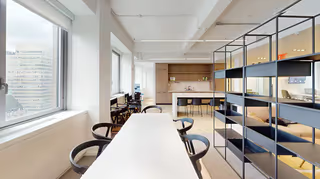 5 Bryant Park [Entire 33rd Floor] 7,500 sq ft $96/sq ft Bryant Park
The team
The people you'll actually deal with
Tenant-side brokers, builders and operators, 300+ New York offices delivered between them.
Meet the whole team → Matthew DeRose
 Megan Gallagher
 Nicholas Hein
 Adam Justin
 David Greene
Talk to a broker
Availability moves daily, get today's version
The spaces above are current as of this week. Tell us team size and timing and a broker sends today's live list for this exact search, with all-in monthly costs, and anything new that has not been published yet.
- Same daya broker replies personally, no automated triage
- Tenant-onlyNomad never represents the landlord
- Open pricingrent and size published before you talk to anyone
- 300+ officesdelivered across 2M+ sq ft in New York
Or call 646-688-3158