The AI Founder's Guide to Opening an Office in New York City
Opening a New York office as an AI founder comes down to four decisions: how much space (about 175 sq ft per person, sized to headcount 12–18 months out), where (Midtown South, for transit and the engineering cluster), what it costs ($43–$200 per square foot per year, median $75), and on what term (12–36 months if hiring is uncertain, longer for a better allowance). Get those right and the buildout is a project-management exercise; get the sizing wrong and nothing else recovers it.
Updated 2026-09-30 · Sizing · cost · term · timeline · Nomad Group
 William JanetschekCo-Founder, COO · Nomad Group
Three things AI teams get wrong that generic startups don't. First, power: a rack of on-prem hardware or a serious inference closet needs electrical capacity and cooling that most loft buildings never planned for, verify amperage and HVAC hours before the LOI, not after. Second, booths: video-heavy days mean an AI team needs roughly double the enclosed rooms of a standard fit-out at the same headcount. Third, security expectations from enterprise customers, SOC 2 walkthroughs go easier with a dedicated, badged floor than a shared one. None of these costs much to solve at design stage; all three are expensive to retrofit.
Why New York, and why now
The AI hiring market went bicoastal, and New York is the second coast. What the city offers is breadth rather than a single specialty: research talent coming out of NYU and Columbia, applied engineers leaving finance with production-scale habits already formed, and the product, design, and go-to-market people that model companies eventually need sitting in the same room as the researchers. The founders who relocate here tell us some version of the same story, that the people they could not hire in the Bay turned out to have been living in Brooklyn all along.
The office market has responded in kind. The Midtown South corridor is where the city's AI companies have clustered, and the book on this site now stretches well beyond it, from the Financial District up to Central Park South. Rents across that book run $43 to $200 per square foot with a $75 median, on floors ranging from about 2,500 to 27,000 square feet, a spread wide enough to seat a seed-stage research pod and a post-Series-B engineering organization out of the same inventory.
The neighborhood decision, compressed
- Flatiron and Union Square: the historic tech core with the best transit reach in the city, at $43 to $115 depending on how far toward trophy product you climb
- Chelsea: the corridor's value play, Google-adjacent, at $44 to $64, and the strongest choice for a team that skews toward west-side commuters
- NoMad: Flatiron's building stock at a modest discount, $57 to $62 on the loft floors and $90 at the Empire State Building, with the best restaurant fabric per dollar of rent in the district
- SoHo: the brand statement at $68 to $125, which earns its premium when the company is consumer-facing and clients come to you
- Penn Plaza: the pragmatist's district at about $51, unbeatable when a meaningful share of the team commutes in from the suburbs
Each of these neighborhoods has a full guide on this site with live availability behind it. Our honest advice, after running this decision for AI teams on a weekly basis, is to collect your team's home subway stations and count the transfers to each candidate neighborhood, because that method settles the argument in an afternoon and beats any brand preference anyone in the room walked in with.
Sizing for a team that doubles
Plan on about 175 rentable square feet per person all-in, and then size the space to the eighteen-month headcount rather than today's. A 20-person company hiring toward 45 should be touring 7,000 to 8,000 square feet, not 3,500, or it should be negotiating expansion rights that actually bind: a right of first offer on the adjacent floor, an option to hand back a wing if the plan changes, or a shorter term with the renewal economics agreed upfront instead of left to a future negotiation you will enter with no leverage.
GPU-heavy teams carry one extra question that no listing broker volunteers, which is electrical capacity and cooling. If any on-premise hardware sits in the plan, even a modest inference closet, get the building engineer's letter on watts per square foot before you sign anything. Retrofitting power into a prewar loft can be done, and it is never cheap, and it is never quick.
What it will actually cost
At the $75 median, the arithmetic runs to about $10,900 a month in rent for every ten people you seat. Layered on top of that come electricity at typically $2 to $4 per square foot, cleaning, internet, insurance, and the one-time buildout, which on a raw loft floor runs $50 to $150 per square foot depending on ambition and which the landlord will often share through a tenant improvement allowance, provided you negotiate for one rather than assume it.
Free rent is customary in this market, not a favor you have to earn: one month per year of term is the standard ask, and the construction period should be free by default on any custom buildout. Every asking rent on this site is published precisely so you can run this arithmetic on real floors before you talk to anyone, ourselves included.
The timeline, without optimism
A furnished or pre-built floor takes two to four weeks from signed lease to desks, which is the fastest honest number in this business. A custom buildout takes ten to sixteen weeks: two to three of design, three to four of permits and long-lead orders, and six to nine of construction, with the stages overlapping where the project is run well. Working backward, a January move-in means touring in September, and every week the tour slips comes straight off the far end of that schedule.
The classic founder error is signing the lease first and only then going out to hire the buildout. Nomad runs both sides of that work under one roof, brokerage and construction management together, which is the practical reason the timelines on this page are ranges we will commit to in writing rather than industry folklore repeated on tours.
How to run the whole search in three weeks
Week one is for fixing the band: headcount times 175 square feet, a monthly ceiling you will not cross, two or three neighborhoods drawn from the list above, and a tour list capped at six floors, because a longer list dilutes judgment faster than it adds options. Week two is for depth, when you test-fit the two finalists, get the building engineers' answers in writing, and start the lease markup while the final tours are still happening. Week three is for closing, when the concessions are negotiated in parallel rather than one at a time, the free months alongside the TI allowance alongside the expansion rights, and the lease is signed.
Three weeks is aggressive, and it is also real, provided the search starts from published rents and floors that actually exist, which is the entire reason this site shows both. Send us the three numbers, headcount, timing, and budget, and the shortlist that starts week one arrives the next business day.
The founder FAQ, answered from placements
Should we sign before or after the round closes? Tour before and sign after the wire, using the term-sheet window to run diligence. The pipeline runs roughly a quarter end to end, so touring at term sheet is what puts desks under the team at exactly the moment post-close hiring needs them.
Do landlords care that we are pre-profit? They care about covenant structure rather than P&L aesthetics. Security sized to your stage, a Good Guy Guarantee with clean exit mechanics, and evidence of funding closes most of these conversations, and it helps to remember that this corridor leases to venture-stage tenants every week. You are the market here, not the exception asking for a favor.
What do we actually need on day one? Less than most founders furnish. Desks, meeting rooms at roughly one per eight people, enough booths for the video load, honest coffee, and serious bandwidth will carry the first year. The $150-a-foot showpiece can wait for the next lease; the cluster address and the commute math cannot, because those two compound from the first hire onward.
What is the one mistake to avoid? Sequential processing. Every expensive month we have watched a founder lose came from running the search, the lease, and the buildout as a queue instead of side by side. The pipeline is a quarter when the workstreams overlap and closer to six months when they wait politely for one another, and it is the same market, the same floors, and the same lawyers either way.
Send the three numbers
Every path through this guide ends at the same door: headcount, timing, budget. Send us those three numbers and what comes back the next business day is a shortlist of real floors with their printed rents, transfer scoring already run against your team's home stations, power questions flagged wherever the plan mentions hardware, and pre-built options marked wherever the clock is loud.
Nothing in the process asks you to take anything on faith. The rents are published whether or not you ever write to us, the walkthroughs are open either way, and the calculator will run your arithmetic without an introduction. What the email adds is the half of the work a website cannot do, the leverage, the read on each building's mood, the negotiation itself, and it starts the quarter that ends with your team's first standup on its own floor.
New York's AI cluster is hiring from the same blocks these pages price. On the evidence of every placement behind this site, the floor your company takes in that cluster is one email and one quarter away.
How much space does an AI team actually need?
About 175 sq ft per person fully loaded, the desk is roughly 25, the rest is meeting rooms, phone booths, pantry and circulation. A 30-person team needs about 5,250 sq ft; a 50-person team about 8,750. AI teams typically need more enclosed booths than a standard fit-out provides, because so much of the day is on video.
Which neighborhood should an AI company choose?
Midtown South, Flatiron, NoMad, Union Square, SoHo, Chelsea. The reason is transit rather than prestige: Union Square alone carries the 4/5/6, N/Q/R/W and L, putting most engineer neighborhoods within a direct ride. Commute length affects offer-acceptance measurably.
What lease term makes sense?
If hiring is uncertain, 12–36 months with expansion rights. If the trajectory is clear, a longer term buys free rent and a larger improvement allowance. The mistake is choosing a term to minimise rent per square foot rather than to match your forecasting horizon.
What does the whole thing cost in year one?
Base rent, for 5,250 sq ft at $75, about $32,813 a month, plus $2–4 per sq ft for electricity, a letter of credit of three to twelve months' rent, furniture if the space is not pre-built, and the gap between the landlord's allowance and the true buildout cost.
How long from decision to desks?
Two to four weeks into a furnished pre-built floor. Ten to sixteen weeks for a custom buildout after signing, with the search itself typically four to eight weeks before that.
What is the most common mistake?
Sizing to today's headcount. It guarantees a move inside the term, and a move costs the buildout you already paid for plus weeks of disruption. The second most common is not checking electrical capacity before signing when hardware will sit on-site.
Matching space available now
-
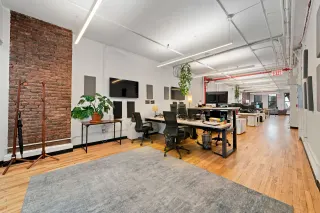 29 West 17th Street [Partial 7th Floor] 2,500 sq ft $60/sq ft Union Square
 -
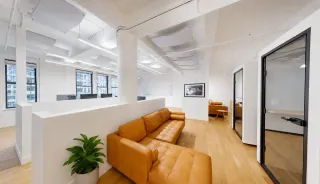 153 West 27th Street [Partial 11th Floor] 2,937 sq ft $60/sq ft Chelsea
 -
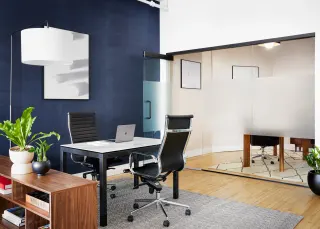 900 Broadway [Partial 9th Floor] 2,940 sq ft $92/sq ft Flatiron
 -
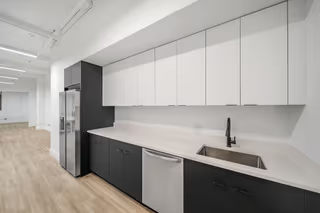 153 W 27th Street [Partial 3rd Floor] 2,978 sq ft $44/sq ft Chelsea
 -
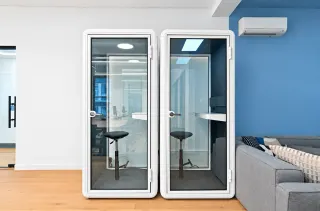 115 West 30th Street [Partial 4th Floor] 3,500 sq ft $55/sq ft Chelsea
 -
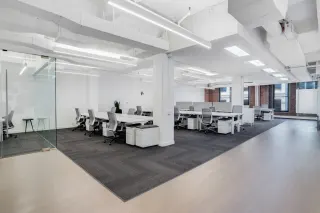 110 Greene Street [Partial 5th Floor] 3,750 sq ft $95/sq ft SoHo
The team
The people you'll actually deal with
Tenant-side brokers, builders and operators, 300+ New York offices delivered between them.
Meet the whole team → Matthew DeRose
 Megan Gallagher
 Nicholas Hein
 Adam Justin
 David Greene
Talk to a broker
Availability moves daily, get today's version
The spaces above are current as of this week. Tell us team size and timing and a broker sends today's live list for this exact search, with all-in monthly costs, and anything new that has not been published yet.
- Same daya broker replies personally, no automated triage
- Tenant-onlyNomad never represents the landlord
- Open pricingrent and size published before you talk to anyone
- 300+ officesdelivered across 2M+ sq ft in New York
Or call 646-688-3158