Office Space for an AI Company in SoHo
SoHo suits AI and design-led technology companies because its cast-iron loft buildings offer large open floor plates, high ceilings and natural light on all sides, the format engineering teams actually want. Nomad currently has 9 spaces in SoHo at $68–$125 per square foot per year, and the area connects via the N/Q/R/W, 6, A/C/E and B/D/F/M.
Updated 2026-09-30 · 9 SoHo spaces · Nomad Group
 William JanetschekCo-Founder, COO · Nomad Group
Why AI companies look at SoHo at all
Flatiron holds the title of the obvious AI address in New York, and we would not argue the point, yet a particular kind of AI company keeps choosing SoHo anyway. It is the company whose product faces consumers and whose hiring plan is half design. A cast-iron floor with fourteen-foot ceilings and glass on two walls is the sort of working environment that design candidates walk into and accept offers in, and the address itself performs quiet marketing work every time it appears in a fundraising deck, a hiring page, or a press piece.
The premium is real. Our SoHo floors ask $68 to $125 against the citywide $75 median, so the honest question, and it is the one we put to clients before any tour gets booked, is whether your company actually monetizes the brand it would be paying for. Model-infrastructure teams usually should not pay it. Consumer AI companies, creative-tools businesses, and anything that demos in front of press plausibly should, and the rest of this page is the arithmetic behind that judgment.
The floors themselves
SoHo inventory is scarce and it is lumpy, and our current book displays both qualities at once. It runs from a 3,750-square-foot partial floor at 110 Greene Street up to 27,344 square feet at One Soho Square, the neighborhood's flagship modern conversion, and the three that show the spread best are the 4,900-square-foot loft at 6 Greene Street, which carries a full 3D walkthrough you can open right now, 50 Greene Street 7,300 square feet, and One Soho Square itself.
Take the three in order. The 6 Greene Street loft asks $78 on its 4,900 square feet, seats about 28, and is the one floor of the group you can walk in full 3D from this page before a tour is ever booked. At 50 Greene Street 7,300 square feet come in at $98 and seat about 42, which places it in the middle of the SoHo market rather than at the value end of the block. One Soho Square carries the top of the range at 27,344 square feet asking $68, with room for about 156, and it is the closest thing this neighborhood offers to an institutional-grade block of space.
That is a 5x spread in size across three floors, and it describes the whole SoHo market in miniature. When a floor fits your headcount and your timing, take it seriously and move on it, because the next one that fits may be a season away, and waiting for a second option to compare against is how tenants end up renewing in a building they had already decided to leave.
Practicalities the brochures skip
Most of the district is landmarked, which slows facade and signage work and adds two to four weeks to any permit clock that touches the street-facing envelope. Freight elevators in the older cast-irons run on schedules, and those schedules end up governing buildouts and hardware deliveries far more than first-time loft tenants expect. And any plan that involves GPUs on premises needs the building engineer's letter on power before anyone signs anything, because 1870s buildings vary wildly in how much electrical headroom they actually carry.
None of this disqualifies the neighborhood, and none of it should scare a well-advised tenant. All of it belongs in the schedule and the budget before the lease is signed rather than discovered afterward, which is why our construction team prices these items into every SoHo proposal by default, and why our SoHo timelines tend to hold when others slip.
The arithmetic against Flatiron
Run the numbers on a 30-person AI company planning at 175 square feet a person, which comes to about 5,250 square feet. At SoHo's $98 median that floor costs $42,875 a month, while the same footage at Flatiron's $72 median comes to $31,500. The SoHo premium for that team works out to about $136,500 a year, which is roughly one senior salary, and putting it in exactly those terms is the most useful thing we do for clients weighing the two neighborhoods.
So frame it that way in your own decision, and ask whether the address recruits, impresses, or converts better than one more hire would. For a consumer AI company shipping a design-led product, it genuinely can, and we have watched it happen across several placements. For an API business it almost never does, and Flatiron sits two stops away with the same loft fabric at the friendlier number.
A tale of two SoHo tenants
Across our placements the pattern repeats often enough to be worth naming. The consumer AI company takes a floor at 6 Greene Street's scale, under 5,000 feet and high on character, and treats the rent premium as brand spend that recruits designers and photographs well in the press. The infrastructure company that toured SoHo for the same reasons ends up at One Soho Square or leaves for Flatiron altogether, because at 27,000 feet the premium stops being a rounding error and starts being an engineer's salary.
Both decisions are right for the companies that made them, and we have signed both kinds of lease with a clear conscience. The failure mode is arriving at either one accidentally, so price the address as marketing, decide in plain terms whether your company monetizes it, and the SoHo question tends to answer itself inside a single meeting.
Building out a cast-iron floor
Cast-iron floors reward a light touch, because the bones are the design and the budget belongs in rooms, acoustics, and lighting rather than in new surfaces fighting old ones. Plan for the landmark buffer, which means two to four weeks on anything that touches facade or signage, book the freight elevator early and hold the booking, and get the electrical letter before signature if any hardware will run on premises, since 1870s risers vary from building to building in ways no listing sheet discloses.
Handled in that order, SoHo buildouts land inside the standard ten-to-sixteen-week window, and the finished floors show what restraint buys in this stock. The client stories on this site carry 3D scans for exactly this reason, and walking through two or three of them is a faster education in cast-iron fit-outs than any budget memo we could write.
Living with the neighborhood, twelve months in
Ask companies a year into a SoHo tenancy what the neighborhood is actually like to operate in and the answers converge. Morning is its best hour, when the streets belong to photographers and delivery trucks, the light through the cast-iron windows does half of the office's ambiance work unpaid, and the commute crowds thin out noticeably south of Houston. The retail hum arrives in the afternoon, and teams stop hearing it within a few weeks. By evening the blocks hand themselves over to restaurants that turn a client dinner into a two-minute walk rather than a crosstown logistics problem.
The operational surprises are few and by now well mapped. Deliveries have to respect the freight schedule, because street loading on the narrow blocks draws enforcement quickly. August and December bring tourist densities that slow a lunchtime errand, and staff adapt by shifting their errands an hour in either direction. The neighborhood's photogenic quality, which sounds like a soft point when a broker raises it, turns out to be a hard recruiting asset, since every candidate walks out of an interview through streets that sell the job one more time on the way back to the train.
The quiet payoff shows up in retention. Design and brand teams in SoHo offices come in, because the office is somewhere people bring visitors with genuine pride, and voluntary attendance follows pride more reliably than it follows any written policy we have seen a company attempt. For the businesses this neighborhood fits, that intangible carries a measurable share of the premium.
The teams that eventually leave SoHo leave for one reason, and it is scale. Floors past 20,000 square feet are rare here, and the second-floor expansion that Flatiron or Midtown can usually produce on demand often simply does not exist on these blocks. If the plan crosses a hundred desks inside three years, weigh that ceiling now, or write the graceful exit into the lease's assignment clauses from the start so that growth never turns into a hostage negotiation with your own landlord.
Start the SoHo question with real floors
The fastest way through this whole decision is to make it concrete. Open the three live floors, starting with the 6 Greene Street scan, run your headcount through the calculator at both the SoHo and corridor medians, and set the delta down next to your hiring plan where everyone can see it. If the address earns its premium on that page, tour within the week, because SoHo stock does not wait and the good corners have a habit of trading between viewings.
If it does not earn the premium, the same afternoon's work has produced your Flatiron shortlist instead, two stops north, the same loft fabric, and twenty-six dollars kinder on every square foot at the medians. Either way, the question that opened this page closes with numbers rather than atmosphere, which is how we believe office decisions ought to close.
When you are ready, send us the three numbers, meaning headcount, timing, and budget, and tell us whether design hiring matters to the plan, because it changes the answer. The shortlist that comes back will price the brand question explicitly, with one column for SoHo and one for the alternative, so that the debate your team has is the real one rather than a proxy argument about taste.
One practical footnote for the fast movers. SoHo landlords respond to prepared tenants the way galleries respond to serious collectors, with better access and straighter answers, and the difference is visible from the first meeting onward. Arriving with the walkthrough already studied, the arithmetic already run, and the term-sheet posture already settled changes the tone of that first conversation, and in a district where the best floors trade between viewings, tone converts directly into timing. Preparation is the only queue-jump this neighborhood sells, and it costs nothing.
Why do tech companies choose SoHo?
Loft floor plates. Cast-iron buildings give wide column-free spans, 12-foot-plus ceilings and windows on multiple sides, better for open engineering floors than a typical Midtown tower floor, and considerably better for recruiting.
What does SoHo office space cost?
Current availability runs $68 to $125 per square foot per year. A 30-person team needing 5,250 sq ft would pay roughly $42,875 per month.
Is SoHo well connected for a distributed team?
Yes, the N/Q/R/W, 6, A/C/E and B/D/F/M all serve it, giving direct access from Brooklyn, Queens and upper Manhattan without a transfer.
Matching space available now
-
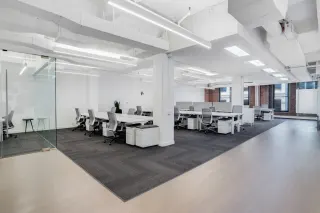 110 Greene Street [Partial 5th Floor] 3,750 sq ft $95/sq ft SoHo
 -
 6 Greene Street [Entire 2nd Floor] 4,900 sq ft $78/sq ft SoHo
 -
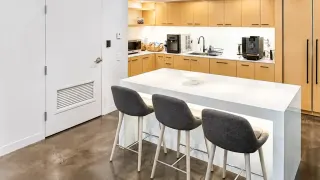 60 Charlton Street [Partial 8th Floor] 5,003 sq ft $120/sq ft SoHo
 -
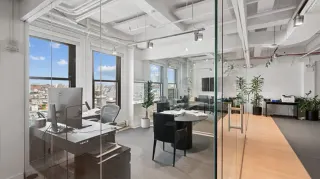 104-110 Greene Street [Partial 11th Floor] 5,375 sq ft $110/sq ft SoHo
 -
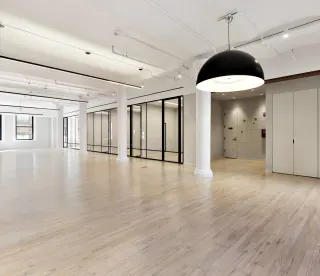 520 Broadway [Entire 10th Floor] 5,539 sq ft $125/sq ft SoHo
 -
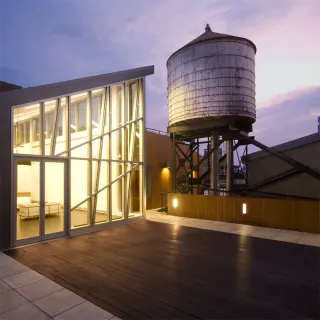 503-511 Broadway [Penthouse] 5,552 sq ft $125/sq ft SoHo
The team
The people you'll actually deal with
Tenant-side brokers, builders and operators, 300+ New York offices delivered between them.
Meet the whole team → Matthew DeRose
 Megan Gallagher
 Nicholas Hein
 Adam Justin
 David Greene
Talk to a broker
Availability moves daily, get today's version
The spaces above are current as of this week. Tell us team size and timing and a broker sends today's live list for this exact search, with all-in monthly costs, and anything new that has not been published yet.
- Same daya broker replies personally, no automated triage
- Tenant-onlyNomad never represents the landlord
- Open pricingrent and size published before you talk to anyone
- 300+ officesdelivered across 2M+ sq ft in New York
Or call 646-688-3158