Union Square vs Hudson Yards: Office Space Compared
Union Square office space runs a median of $88 per square foot per year against $200 in Hudson Yards, Union Square is about 56% cheaper. Nomad currently has 3 spaces in Union Square and 1 in Hudson Yards.
Updated 2026-10-01 · $88 vs $200 per sq ft · Nomad Group
Rents, sizes and monthly figures come from our current availability in both submarkets, the 175 square feet per person from the standard we plan every floor against, and the citywide comparison from the $75 median across the 49 floors on our book. The Union Square median rests on two published rents out of three floors, and Hudson Yards is a single floor, so both numbers are samples rather than indices. We hold no description of the Hudson Yards floor, so nothing here describes it.
The gap is $112 a foot, and what the medians are made of
Median asking rent in Union Square is $88 per square foot per year against $200 in Hudson Yards, a difference of $112 a foot and about 56 percent off the Hudson Yards number. Run it on the only Hudson Yards floor we hold. At 10,517 square feet and $200 it is $2,103,400 a year and about $175,283 a month; the same footprint at the Union Square median would be $925,496 and about $77,125. That is $98,158 every month, $1,177,904 a year, close to $5.9 million across a five-year term.
Both figures deserve a caveat before anyone plans around them. Union Square's $88 is the midpoint of the only two rents we publish there, $60 at 29 West 17th Street and $115 at 900 Broadway, because our third floor, the largest of the three, carries no asking rent at all. A median of two numbers $55 apart is a coin toss dressed as a statistic. Hudson Yards' $200 is worse in a different way: one price on one floor, which is a quote rather than a median.
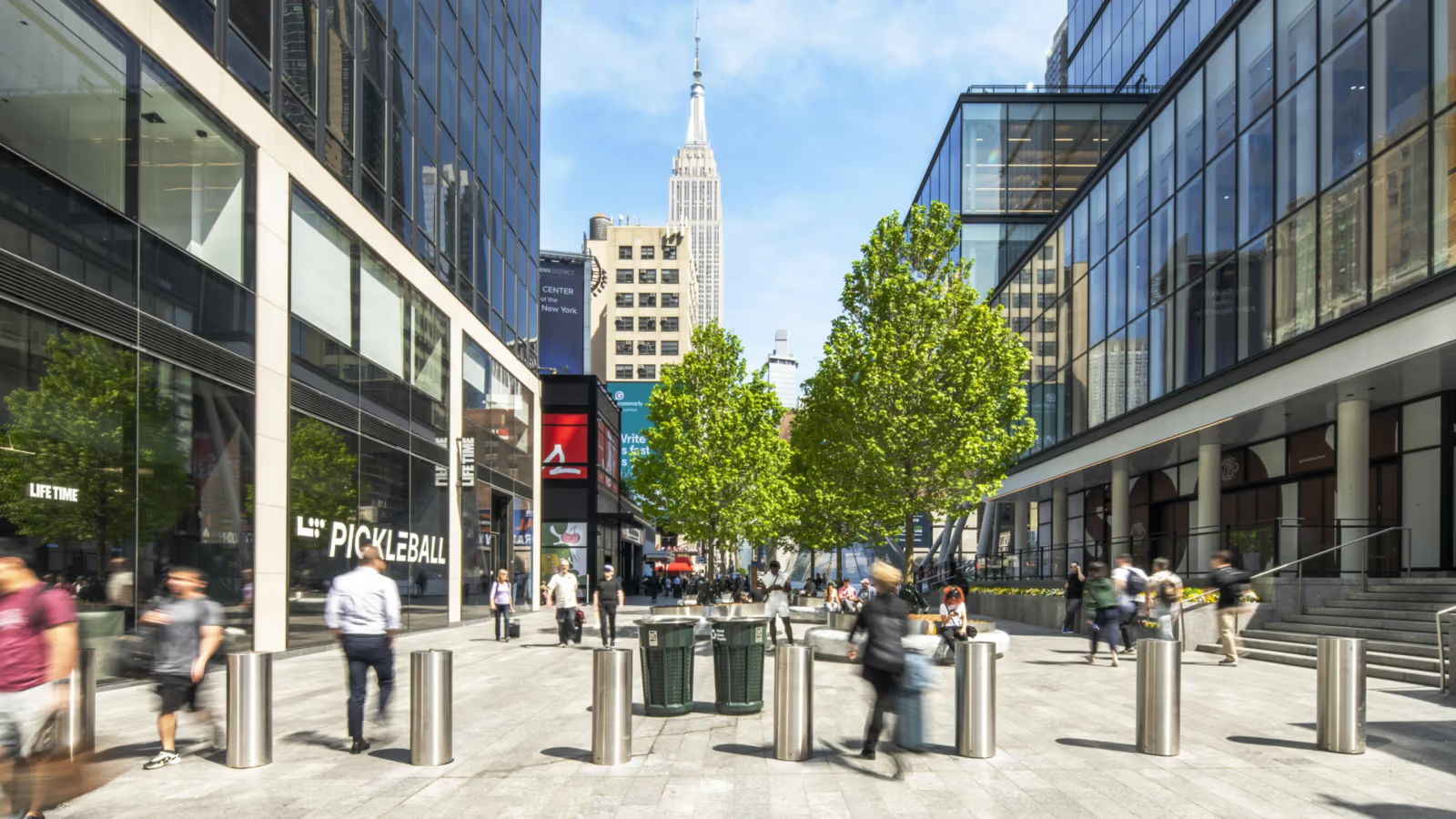
Against the $75 that sits in the middle of the 49 floors we represent citywide, Union Square runs about 17 percent high and Hudson Yards about 167 percent high, which makes that floor the dearest space on our whole book by a wide margin; the next most expensive thing we carry anywhere is 2 Penn Plaza at $135. What each submarket sells explains it. Hudson Yards is the newest office district in Manhattan, purpose-built towers over the West Side rail yards, and the floor sits high in 66 Hudson Boulevard, The Spiral. Union Square is the best-connected transit hub below 42nd Street, and what it charges for is reach.
Three floors against one, and only two of them priced
Union Square is three floors, 2,500 to 13,754 square feet, roughly 14 to 79 desks at the 175 square feet per person we plan against. Hudson Yards is one floor, 10,517 square feet, about 60 desks.
- Union Square: 29 West 17th Street, Partial 7th Floor, 2,500 sq ft at $60, about $12,500 a month, furnished, wired and plug and play on a sublease through September 2027, with hardwood floors, exposed ceilings and a full 3D walkthrough on its page; 900 Broadway, Suite 202, 4,000 sq ft at $115, about $38,333 a month, with a pantry, a conference room and hardwood floors on our record; 836 Broadway, Entire 2nd Floor, 13,754 sq ft, about 79 desks, asking rent not published.
- Hudson Yards: 66 Hudson Boulevard, Partial 53rd Floor, 10,517 sq ft at $200, about $175,283 a month. Our record carries no description of its condition or layout, so whether it arrives raw, pre-built or furnished is a tour question, and the first one to ask.
Now line the books up at the headcount Hudson Yards actually serves, about 60 people, and Union Square narrows to one candidate. The 2,500 and 4,000 square foot floors are a third and a half that size. Only 836 Broadway reaches it, at 13,754 square feet and about 79 desks, and that is the floor without a published rent. If it were asking the submarket median it would run roughly $100,863 a month, but that is an illustration and not an offer, and the real number has to be asked for.
The two priced Union Square floors make the point from the other end. Together they are 6,500 square feet, about 37 desks, and $50,833 a month. The single Hudson Yards floor is 10,517 square feet, 60 desks, and $175,283. Per desk per year the Hudson Yards floor runs about $35,057 against $16,486 across those two.
Getting there, and not one line in common
Union Square runs 4/5/6, N/Q/R/W and L, all at 14th Street. Hudson Yards runs the 7 at 34th Street Hudson Yards, with the A/C/E and the LIRR at Penn a few blocks east. There is no overlap. Not one line appears on both lists, which is rare enough between Manhattan submarkets that it is worth pausing on, and it means a move between these two is a new commute for effectively everybody on the payroll.
Union Square's strength is that everything lands in one station: three trunk groups plus the L, the widest subway catchment below 42nd Street and most of the reason the submarket prices above the citywide median. It is particularly strong for Brooklyn, and for anyone already on the east-side or Broadway trunks. Hudson Yards is a commuter-rail story. The 7 serves the district itself, but the volume walks west from Penn, where the LIRR, NJ Transit and Amtrak land, so New Jersey and Long Island are the directions it flatters.
That divergence outlasts the rent. Take the home stations of the people you already employ, count transfers rather than minutes, and do it before the tour. A lease runs five to ten years, and moving a subway-dependent team from a single 14th Street station to the end of the 7 is the kind of change people quote back to you at eighteen months.
The recommendation, without the hedging
For almost everyone, Union Square. It is 56 percent cheaper, it covers 14 to 79 desks against a single size, it sits on more subway lines than any station below 42nd Street, and it gives you more than one landlord to negotiate against. A team of 14 can start at 29 West 17th Street for $12,500 a month on a sublease that ends in September 2027, which is about as low-commitment as a real office in Manhattan gets.
Hudson Yards earns $200 in one case. The requirement is genuinely the newest construction in New York, the building is part of what you sell to clients and to candidates you are competing hard for, the headcount is near 60 so one floor does it, and $175,283 a month is a number the business carries without arguing about it every quarter. For that tenant there is no substitute on the island, and that scarcity is the whole of the price. For anyone else it is an expensive way to buy an address.
One floor against three, with only two of the three priced, is a thin comparison and we would rather say so than dress it up. What would fix it is depth in Hudson Yards, a second and third floor at different sizes and price points, and an asking rent on 836 Broadway. Both may arrive. Neither has.
The practical next step
Four floors across two submarkets fits in an afternoon if you plan the crosstown leg properly. Walk Hudson Yards first, while the number is still theoretical, then come down to 14th Street. One of the Union Square floors can be part-walked from a laptop before you book anything, which shortens the day.
On the Hudson Yards floor and on 836 Broadway, establish what our record does not carry: the asking rent in the second case, and in both, condition as delivered, the existing layout and whether it survives, the loss factor in writing with a measured plan, and what ownership will contribute to a buildout. At the top of the market the headline rent moves least, so push on term, free rent, allowance and a capped escalation instead.
We represent tenants only and publish every rent we hold. Send the headcount you carry today, the one you expect in three years and the monthly number you will not cross, and we will model both submarkets across the full term rather than per foot.
Is Union Square more expensive than Hudson Yards?
No, Union Square is about 56% cheaper, $88 against $200 per square foot per year. Both figures are medians of Nomad's current availability.
Which suits a growing team better?
Union Square: The best-connected transit hub below 42nd Street, minutes from NYU and Flatiron. Hudson Yards: The newest office district in Manhattan, purpose-built towers over the rail yards on the far West Side. The deciding factor is usually commute and the rent difference on the floor size you actually need.
How do they compare on transit?
Union Square, 4/5/6, N/Q/R/W, L at 14th Street. Hudson Yards, 7 at 34th Street Hudson Yards, A/C/E and LIRR at Penn.
Can we tour both submarkets in one day?
Yes. These submarkets sit minutes apart; a well-planned tour covers four to six floors across both in an afternoon, which is the fastest way to make this comparison real.
How firm are the boundaries between these neighborhoods?
Soft. Brokers and landlords shade labels a block or two in whichever direction sounds better. Judge the block and the building, not the name on the map.
Matching space available now
-
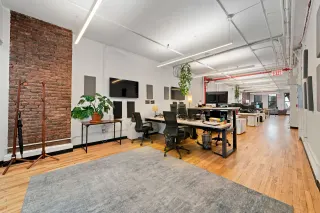 29 West 17th Street [Partial 7th Floor] 2,500 sq ft $60/sq ft Union Square
 -
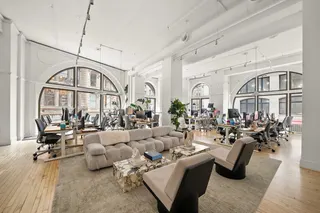 900 Broadway [Suite 202] 4,000 sq ft $115/sq ft Union Square
 -
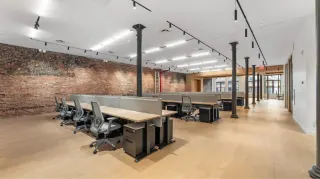 836 Broadway [Entire 2nd Floor] 13,754 sq ft Union Square
 -
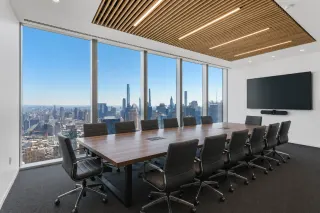 66 Hudson Boulevard [Partial 53rd Floor] 10,517 sq ft $200/sq ft Hudson Yards
The team
The people you'll actually deal with
Tenant-side brokers, builders and operators, 300+ New York offices delivered between them.
Meet the whole team → William Janetschek
 Matthew DeRose
 Megan Gallagher
 Nicholas Hein
 Adam Justin
 David Greene
Talk to a broker
Availability moves daily, get today's version
The spaces above are current as of this week. Tell us team size and timing and a broker sends today's live list for this exact search, with all-in monthly costs, and anything new that has not been published yet.
- Same daya broker replies personally, no automated triage
- Tenant-onlyNomad never represents the landlord
- Open pricingrent and size published before you talk to anyone
- 300+ officesdelivered across 2M+ sq ft in New York
Or call 646-688-3158