Midtown vs Grand Central: Office Space Compared
Midtown office space runs a median of $125 per square foot per year against $81 in Grand Central, Midtown is about 55% more expensive. Nomad currently has 4 spaces in Midtown and 2 in Grand Central.
Updated 2026-10-01 · $125 vs $81 per sq ft · Nomad Group

Overlapping markets with different centers of gravity. Grand Central anchors the eastern, rail-fed, professional-services end; broader Midtown spreads west toward the theaters with more varied stock and sizes. Metro-North teams anchor east; everyone else can let the specific building win.
Forty-four dollars apart, and a number worth watching
Two dollars a foot separate these submarkets on our book, $79 in Midtown against $81 in Grand Central, about 2 percent. On a 5,500 square foot floor that is $242,000 a year, about eleven Midtown seats' worth, and no single round on free rent erases it. That is a number worth weighing before you pick a neighborhood.
The spread inside each market is where the money sits. Midtown's four floors ask $79 to $130, a range about the size of the gap between the medians, while Grand Central's two ask $72 to $89. Against the $75 citywide median across our book, Midtown runs about 5 percent higher and Grand Central about 8 percent above.
The little gap that exists tracks what each stock was built to do. Midtown's supply is large, efficient tower plates where security and round-the-clock HVAC ride inside the rent; around the terminal, prewar side-street floors sit beside newer trophy plates and the ask buys proximity to the train as much as square footage. Get usable square feet alongside rentable in both, since loss factor moves several points between them.
Six floors between them, and no size overlap
Six floors across the two markets, and inventory settles more searches here than rent does.
- Midtown: 4 floors, 7,092 to 19,097 square feet, roughly 41 to 109 desks, asking $79 to $130.
- Grand Central: 2 floors, 5,230 to 5,772 square feet, roughly 30 to 33 desks, asking $72 to $89.
- Overlap: none. Grand Central's largest floor stops 1,320 square feet short of Midtown's smallest.
That gap is the comparison. A team of 30 has nothing to walk in Midtown, where the smallest floor is 7,092 square feet at 520 Madison Avenue, about $73,875 a month at $125 with eleven seats sitting empty. A team of 60 has nothing to walk in Grand Central, whose largest floor is 5,772 feet at 60 East 42nd Street, about $34,632 a month.
Priced per desk the ranking holds. 60 East 42nd Street, 5,772 feet at $72, works out near $1,049 a desk each month across 33 desks, the cheapest seat of the five with a posted rent; 1700 Broadway lands near $1,149, 825 Third Avenue near $1,293, 520 Madison Avenue near $1,802 and 277 Park Avenue near $1,898. Plan at 175 square feet per person and compare monthly checks, not headline rents.
Two commutes, two hiring maps
Midtown reads nearly every line, with Grand Central and Penn within reach. Grand Central reads 4/5/6, 7, S and Metro-North. Both are excellent, for different populations.
Grand Central is the narrower subway map and the wider regional one, since Metro-North puts Westchester and Connecticut inside forty minutes. A partner who steps off the platform and walks a few minutes to her desk will still be defending that office in year four.
Midtown's advantage is that it makes nobody's commute the exception, with almost every line walkable and both regional terminals on foot, so a company hiring across the boroughs and the suburbs at once never decides whose morning gets longer. Every transfer you add is an argument the competing offer makes for free. Count where your senior bench actually lives: if a third of it rides Metro-North, the $2 gap is the cheapest line in your recruiting budget.
Our recommendation, by tenant type
Up to about 33 desks, take Grand Central. Nothing we hold in Midtown is small enough, and tower rent on space you cannot fill burns the difference many times over in year one.
From about 41 desks up, take Midtown with the same certainty, since Grand Central holds nothing near that size and splitting one company across two buildings costs more in friction than the rent saving returns.
Between 33 and 41 desks the two do not compete, they both miss, which is the moment to widen into Bryant Park or Murray Hill, or to take the smallest Midtown floor and grow into it.
Where a real choice exists, take Grand Central when the commute decides your hiring, when clients arrive by train, or when your culture depends on one boutique floor rather than a slice of a tower. Midtown is no automatic premium: 520 Madison Avenue asks $125 and 277 Park Avenue $130, above every Grand Central floor, while 1700 Broadway asks $79, below both medians. The building beats the neighborhood.
Walk both in one afternoon
These two share a border, each sits in the other's list of neighbors, and the walk between them takes minutes, so tour them the same day. A floor seen in March against one seen in May is a comparison of memories.
We hold floors in both, which makes this one route and one broker. Two in Midtown plus both Grand Central floors fills a comfortable afternoon. Bring the headcount you expect at the end of the term, and on each floor ask for the usable measurement, the concessions behind the ask, and the security the landlord wants.
Is Midtown more expensive than Grand Central?
Yes, Midtown runs about 55% higher, $125 against $81 per square foot per year. Both figures are medians of Nomad's current availability.
Which suits a growing team better?
Midtown: Manhattan’s corporate core, with the deepest supply of full-floor space. Grand Central: East Midtown around the terminal, unmatched for Westchester and Connecticut commuters. The deciding factor is usually commute and the rent difference on the floor size you actually need.
How do they compare on transit?
Midtown, Nearly every line; Grand Central and Penn within reach. Grand Central, 4/5/6, 7, S, Metro-North.
Which should you choose?
Overlapping markets with different centers of gravity. Grand Central anchors the eastern, rail-fed, professional-services end; broader Midtown spreads west toward the theaters with more varied stock and sizes. Metro-North teams anchor east; everyone else can let the specific building win.
Can we tour both submarkets in one day?
Yes. These submarkets sit minutes apart; a well-planned tour covers four to six floors across both in an afternoon, which is the fastest way to make this comparison real.
How firm are the boundaries between these neighborhoods?
Soft. Brokers and landlords shade labels a block or two in whichever direction sounds better. Judge the block and the building, not the name on the map.
Matching space available now
-
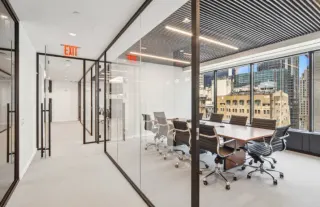 520 Madison Avenue [Partial 21st Floor] 7,092 sq ft $125/sq ft Midtown
 -
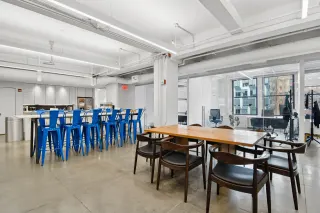 45 West 45th Street [Entire 10th Floor] 8,230 sq ft Midtown
 -
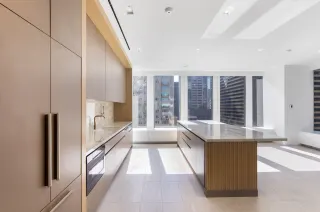 1700 Broadway [Entire 26th Floor] 13,266 sq ft $79/sq ft Midtown
 -
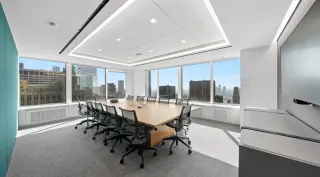 277 Park Avenue [Partial 40th Floor] 19,097 sq ft $130/sq ft Midtown
 -
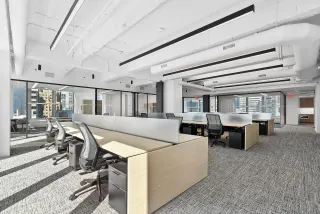 825 Third Avenue [Partial 29th Floor] 5,230 sq ft $89/sq ft Grand Central
 -
 60 East 42nd Street [Partial 13th Floor] 5,772 sq ft $72/sq ft Grand Central
The team
The people you'll actually deal with
Tenant-side brokers, builders and operators, 300+ New York offices delivered between them.
Meet the whole team → William Janetschek
 Matthew DeRose
 Megan Gallagher
 Nicholas Hein
 Adam Justin
 David Greene
Talk to a broker
Availability moves daily, get today's version
The spaces above are current as of this week. Tell us team size and timing and a broker sends today's live list for this exact search, with all-in monthly costs, and anything new that has not been published yet.
- Same daya broker replies personally, no automated triage
- Tenant-onlyNomad never represents the landlord
- Open pricingrent and size published before you talk to anyone
- 300+ officesdelivered across 2M+ sq ft in New York
Or call 646-688-3158