NoMad, NYC: The Neighborhood, From an Office Tenant's Side
NoMad is the block of Broadway that fashion wholesale built and hotels revived. North of Madison Square Park, its prewar stock, sturdy, efficient, side-core floors, has been repositioned building by building since the Ace and NoMad hotels made the high 20s a destination, and the office tenancy followed: growth-stage companies stepping up Broadway from Flatiron when their own floor there is not on offer that quarter. The recruiting pitch is the neighborhood itself, the park two blocks south and a restaurant scene that makes every candidate dinner easy.
Updated 2026-09-30 · The newer startup cluster: boutique full floors with a restaurant scene attached · Nomad Group

The newer cluster, one park north
NoMad is what happened when Flatiron filled up. The blocks north of Madison Square Park inherited the same prewar loft stock, broad Broadway floors, high ceilings, corner light, and a wave of hotel and restaurant investment turned a wholesale district into one of the city's better food neighborhoods. Office tenants followed, and the area now reads as Flatiron's younger sibling: same bones, slightly newer crowd, often a slightly better deal.
Our current NoMad floors ask $57 to $90 per square foot around a $62 median, thirteen dollars under the citywide $75, about 17% below, for loft stock that trades within a few dollars of its Flatiron equivalents one park south. The three loft floors sit within five dollars of each other, and that tight band is the neighborhood's quiet pitch: full floors, honest lofts, no premium theatre.
What the stock is like
Broadway between 25th and 30th carries the signature buildings: wide plates of 8,000 to 12,000 square feet, twelve-foot ceilings, the deep windows the wholesale trade needed. Side-street buildings run smaller and cheaper. Most of the stock is one tenant per floor with keyed elevators, and the buildings that have been renovated, new lobbies, new systems, compete directly with Flatiron on everything but the name.
- Current range: $57 to $90 per square foot per year
- Median: $62, thirteen dollars under the citywide $75
- Floors here fit teams of roughly thirty to seventy
Transit and the park
The N/R/W at 28th Street runs through the neighborhood; the 6 is two blocks east, and Herald Square, one stop or an eight-minute walk, adds the B/D/F/M and PATH. Penn Station is ten minutes on foot, which makes NoMad genuinely workable for New Jersey and Long Island commuters.
Madison Square Park is the southern boundary and functions as the neighborhood's shared campus green. Between the park, the hotel lobbies and a restaurant row that includes some of the city's most reserved-about tables, the after-work fabric is far stronger than the neighborhood's low profile suggests.
Who it suits
Teams that want Flatiron's location logic without paying for Flatiron's name recognition: startups on their second office, agencies, and the operating companies of consumer brands. The hotel cluster also makes it the easiest neighborhood in the corridor for companies with constant out-of-town visitors, board members and clients can stay a block from the office.
Running a NoMad search well
Compare every NoMad floor against a Flatiron equivalent, that is the neighborhood's whole value case, and let the delta pay for your buildout. Renovated-building premiums here are real but modest; unrenovated buildings can be excellent value if you have the appetite for a longer fit-out.
Walk Broadway floors at midday for light and at 6pm for noise, the avenue carries traffic that side-street floors never hear. And check freight access: some of the wholesale-era buildings still run freight elevators on restricted hours, which matters for a buildout schedule and for any team that ships physical product.
The floors on the book right now
Three live floors tell the neighborhood's story in miniature. 1235 Broadway's entire fourth floor holds 9,500 square feet at $62, furnished, wired, wrapped in windows, with a large wet pantry and its own 3D walkthrough. One door north, 1239 Broadway's entire twelfth floor scales to 12,500 feet at $62, polished concrete and brand-new linear lighting, built for a team of 75 to 80 and also walkable online. And 22 West 27th Street's entire seventh floor brings the side-street alternative at $57, the kind of floor that trades against Flatiron equivalents asking more.
NoMad's book still runs thinner than Chelsea's or Flatiron's, which cuts both ways: less choice at any moment, and less competition from other tenants when the right floor appears. When a NoMad penthouse fits, it tends to still be available a week later in a way Flatiron corners are not.
How deals here tend to trade
The neighborhood's owners invested heavily through the hotel boom and want tenancies that match the upgraded blocks, which makes them genuinely negotiable with credible companies: free months arrive readily, allowances track the renovation standard of the building, and three-to-five-year terms are the working norm.
The practical play is comparative: every NoMad negotiation strengthens when a Flatiron alternative sits on the table, because the discount is the neighborhood's own pitch. We run the two submarkets as one search by default, same tour afternoon, same spreadsheet, and let the buildings argue it out.
A day in the life, one park north
NoMad days orbit the park and the hotels. Mornings are calm, the N/R/W wave spreads thin across the blocks, coffee culture here rivals anywhere in the city, and Madison Square Park fills with the laptop-and-espresso shift before offices open. The working day carries Flatiron's energy at two-thirds the density: same light, same lofts, fewer tourists photographing the intersection.
The neighborhood's superpower is 6pm. The hotel bars and the restaurant row mean after-work plans happen by default, no organizing, no reservations for the first round, and client dinners live within a block of the office. Teams that moved here from quieter districts cite that fabric, unprompted, as the thing that made five-day culture feel voluntary.
Month-twelve reports run consistent: the Flatiron comparison that justified the lease keeps justifying it, the discount held, the stock matched, and visitors cannot tell where one neighborhood ends. The arbitrage this guide describes is durable because it is structural, the name premium sits one block south, and the buildings do not know it. Our current entire seventh floor at 22 West 27th Street, asking $57, is that argument with an elevator.
Is NoMad your answer? The arbitrage test
NoMad's case closes with one comparison run honestly: take your shortlisted Flatiron floor, find its NoMad equivalent, one block north, same bones, and put the monthly delta next to what it funds, a better buildout, a hire, a longer runway. If the delta is real and the team's commute map does not object, the neighborhood has made its argument, quietly, the way it does everything.
Add the intangibles only after the arithmetic: the park across the street, the restaurant fabric that makes retention feel effortless, the hotel row that turns visitor logistics into a non-event. They are real, but they are the bonus, the discount is the thesis.
Our current 1235 Broadway floor at $62 is the test case waiting: price it against its Flatiron twins on this site, both rents printed, and send the three numbers when the comparison lands the way it usually does.
What does NoMad stand for?
North of Madison Square Park, a 2000s-era name for the wholesale district along Broadway in the high 20s, coined as the hotels and restaurants arrived. The name stuck because the revival did.
Is NoMad a good place for an office?
For a growth-stage company that wants a full prewar floor near the Flatiron cluster without waiting for Flatiron availability, yes, same talent pool, newer scene, and the strongest hotel-and-restaurant backdrop in Midtown South for hosting.
NoMad or Flatiron?
Neighbors in the same market. Flatiron is the established name with the deepest density; NoMad is the newer cluster a few blocks north with more full-floor availability at any given moment. Tour both; the building decides.
Who offices in NoMad?
Startups out of their first office, funds and agencies that host often, and companies that recruit on neighborhood energy. The typical deal is a boutique full floor in a repositioned prewar building.
What does office space cost in NoMad?
Across Nomad's current NoMad availability, asking rents run $57–$90 per square foot per year, median $62, every listing publishes its rent, size and address. The live availability sits on the NoMad submarket page.
Matching space available now
-
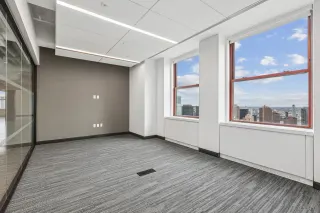 Empire State Building [Partial 43rd Floor] 5,621 sq ft $90/sq ft NoMad
 -
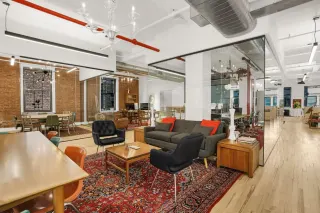 22 West 27th Street [Entire 7th Floor] 6,000 sq ft $57/sq ft NoMad
 -
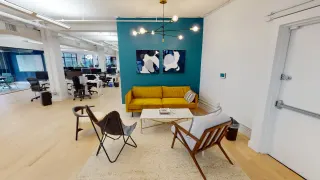 1235 Broadway [Entire 4th Floor] 9,500 sq ft $62/sq ft NoMad
 -
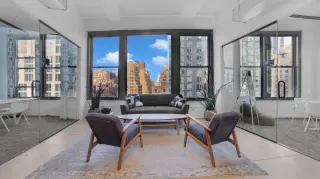 1239 Broadway [Entire 12th Floor] 12,500 sq ft $62/sq ft NoMad
The team
The people you'll actually deal with
Tenant-side brokers, builders and operators, 300+ New York offices delivered between them.
Meet the whole team → William Janetschek
 Matthew DeRose
 Megan Gallagher
 Nicholas Hein
 Adam Justin
 David Greene
Talk to a broker
Availability moves daily, get today's version
The spaces above are current as of this week. Tell us team size and timing and a broker sends today's live list for this exact search, with all-in monthly costs, and anything new that has not been published yet.
- Same daya broker replies personally, no automated triage
- Tenant-onlyNomad never represents the landlord
- Open pricingrent and size published before you talk to anyone
- 300+ officesdelivered across 2M+ sq ft in New York
Or call 646-688-3158