Flatiron vs Union Square: Office Space Compared
Flatiron office space runs a median of $72 per square foot per year against $88 in Union Square, Flatiron is about 18% cheaper. Nomad currently has 6 spaces in Flatiron and 3 in Union Square.
Updated 2026-10-01 · $72 vs $88 per sq ft · Nomad Group
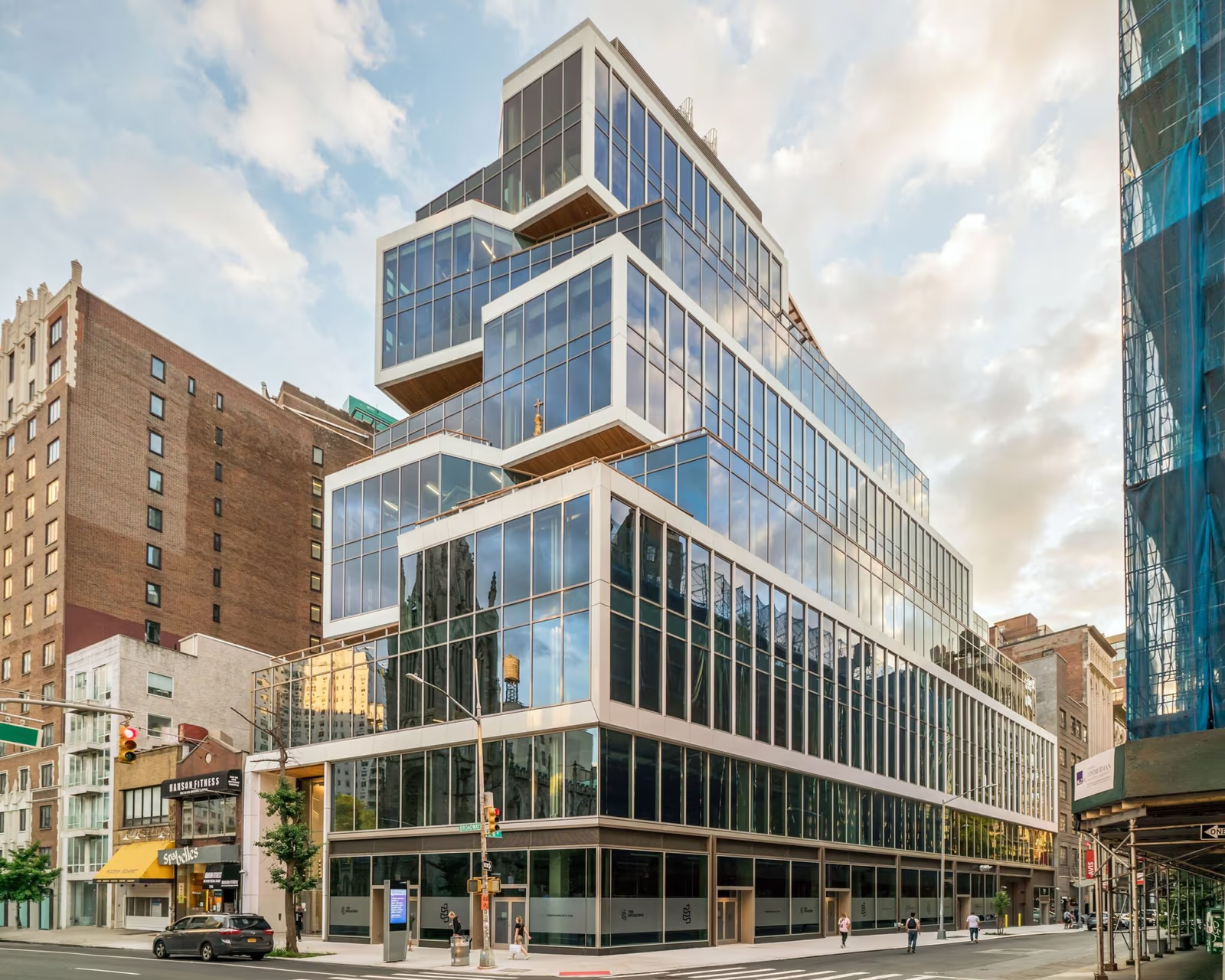
Adjacent to the point of overlap; many buildings could carry either label. Union Square edges transit (the L plus every trunk line) and park light; Flatiron edges availability and the startup-cluster address. Treat them as one search and let the specific floor decide.
The $16 gap and what is behind it
Across the 6 spaces we hold in Flatiron, asking rents run $43 to $115 per square foot per year with a median of $72, while Union Square's 3 spaces run $60 to $115 with a median of $88. The gap is about $16 a foot, roughly 18% cheaper in Flatiron, close to $80,000 a year on a 5,000 square foot floor. Against the $75 citywide median across our book, Flatiron sits about 4% below the middle of New York and Union Square about 17% above, so this is a choice between a submarket priced just under the city's midpoint and one priced well over it, not a trade of price for prestige.
Building quality explains less of that gap than most tenants expect, since both submarkets top out at the same $115 ask and 900 Broadway carries a floor on each of our lists. Thin inventory explains more. Only two of the three Union Square floors carry a published number, one at $60 and one at $115, so the median lands at $88 without a single floor actually asking it, and that $60 floor undercuts the Flatiron median by $12.
Read every ask as an opening position, since free rent, improvement dollars and escalation terms can swing effective cost by more than the $16 between these medians.
What we actually hold in each
Flatiron's 6 floors run 2,940 to 10,562 square feet, roughly 17 to 60 desks at the 175 square feet per person we plan around. Union Square's 3 floors run 2,500 to 13,754 square feet, about 14 to 79 desks. Union Square owns both extremes on paper, but the middle of its range is empty.
That emptiness decides more searches than the rent does.
- Under 15 desks: Union Square holds the smallest and cheapest floor on either side, 2,500 square feet at $60.
- Roughly 30 to 60 desks: Flatiron without competition, with floors at 5,250, 5,500, 8,308 and 10,562 square feet, while Union Square offers nothing between 4,000 and 13,754.
- Seventy desks and up: only 836 Broadway's 13,754 square foot second floor, so Union Square by default.
Near 4,000 square feet the two genuinely compete, 54 West 21st Street at 3,960 square feet and $72 against Suite 202 at 900 Broadway, 4,000 square feet at $115. Same space, about $172,000 a year apart.
Getting there and getting your people there
In Flatiron the lines are N/Q/R/W, 4/5/6, F/M, L at 14th and 23rd; in Union Square they are 4/5/6, N/Q/R/W, L all at 14th Street. The overlap is close to total. Union Square concentrates its lines into one interchange, and Flatiron spreads the same trunk lines across 14th and 23rd while adding the F/M.
Concentration matters more than count once hiring is the issue. A single interchange at 14th Street keeps door-to-door times short from every borough and puts Brooklyn's engineering talent one stop away. Flatiron's spread costs a few minutes and buys back the F/M. Walking between the two takes minutes, so what you are choosing is the station your team surfaces at, and whether the people you have not hired yet live where it helps.
Our recommendation, by tenant type
For a 30 to 60 person company that wants a full floor with its name in the elevator lobby, take Flatiron, and it is not close. Every floor in that band across both submarkets is a Flatiron floor, and the median runs $16 a foot cheaper.
A team under fifteen watching the budget should start at 29 West 17th Street, 2,500 square feet at $60, the smallest floor and the lowest monthly check we hold in this comparison. Union Square takes the value crown for once.
Pay the Union Square premium when hiring is the binding constraint on the business. A company adding twenty people over the next eighteen months is buying a commute that closes offers, and $16 a foot on 4,000 square feet is $64,000 a year against the cost of losing two senior candidates. Union Square's top ask of $115 matches Flatiron's, so paying up there is not paying above the best Flatiron floors.
How to settle this in one afternoon
Both submarkets tour in a single day and we hold floors in each. A sensible route covers four to six spaces and should include 900 Broadway, where a Flatiron-labeled partial ninth floor at $92 and a Union Square-labeled Suite 202 at $115 sit in the same building. Standing in both resolves the label question faster than a spreadsheet will.
Come with a test fit, or let us build one, so you compare usable space rather than rentable square feet, because loss factor moves floor by floor and the cheaper ask does not always deliver the cheaper desk. Get each landlord's position on free rent, improvement dollars and term before you fall for a floor. We represent tenants only.
Is Flatiron more expensive than Union Square?
No, Flatiron is about 18% cheaper, $72 against $88 per square foot per year. Both figures are medians of Nomad's current availability.
Which suits a growing team better?
Flatiron: The heart of Midtown South and the centre of NYC’s venture-backed tech cluster. Union Square: The best-connected transit hub below 42nd Street, minutes from NYU and Flatiron. The deciding factor is usually commute and the rent difference on the floor size you actually need.
How do they compare on transit?
Flatiron, N/Q/R/W, 4/5/6, F/M, L at 14th and 23rd. Union Square, 4/5/6, N/Q/R/W, L at 14th Street.
Which should you choose?
Adjacent to the point of overlap; many buildings could carry either label. Union Square edges transit (the L plus every trunk line) and park light; Flatiron edges availability and the startup-cluster address. Treat them as one search and let the specific floor decide.
Can we tour both submarkets in one day?
Yes. These submarkets sit minutes apart; a well-planned tour covers four to six floors across both in an afternoon, which is the fastest way to make this comparison real.
How firm are the boundaries between these neighborhoods?
Soft. Brokers and landlords shade labels a block or two in whichever direction sounds better. Judge the block and the building, not the name on the map.
Matching space available now
-
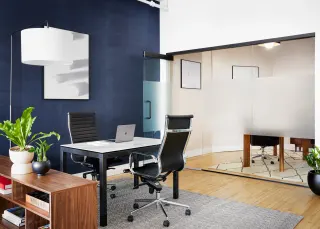 900 Broadway [Partial 9th Floor] 2,940 sq ft $92/sq ft Flatiron
 -
 54 West 21st Street [Partial 4th Floor] 3,960 sq ft $72/sq ft Flatiron
 -
 30 West 21st Street [Penthouse floor] 5,250 sq ft $115/sq ft Flatiron
 -
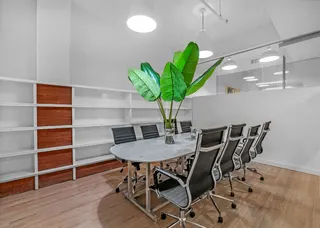 276 Fifth Avenue [9th Floor] 5,500 sq ft $52/sq ft Flatiron
 -
 137 East 25th Street [6th Floor] 8,308 sq ft $43/sq ft Flatiron
 -
 30 West 21st Street [Entire 9th & 10th Floors] 10,562 sq ft Flatiron
The team
The people you'll actually deal with
Tenant-side brokers, builders and operators, 300+ New York offices delivered between them.
Meet the whole team → William Janetschek
 Matthew DeRose
 Megan Gallagher
 Nicholas Hein
 Adam Justin
 David Greene
Talk to a broker
Availability moves daily, get today's version
The spaces above are current as of this week. Tell us team size and timing and a broker sends today's live list for this exact search, with all-in monthly costs, and anything new that has not been published yet.
- Same daya broker replies personally, no automated triage
- Tenant-onlyNomad never represents the landlord
- Open pricingrent and size published before you talk to anyone
- 300+ officesdelivered across 2M+ sq ft in New York
Or call 646-688-3158