Flatiron vs Midtown: Office Space Compared
Flatiron office space runs a median of $72 per square foot per year against $125 in Midtown, Flatiron is about 42% cheaper. Nomad currently has 6 spaces in Flatiron and 4 in Midtown.
Updated 2026-10-01 · $72 vs $125 per sq ft · Nomad Group
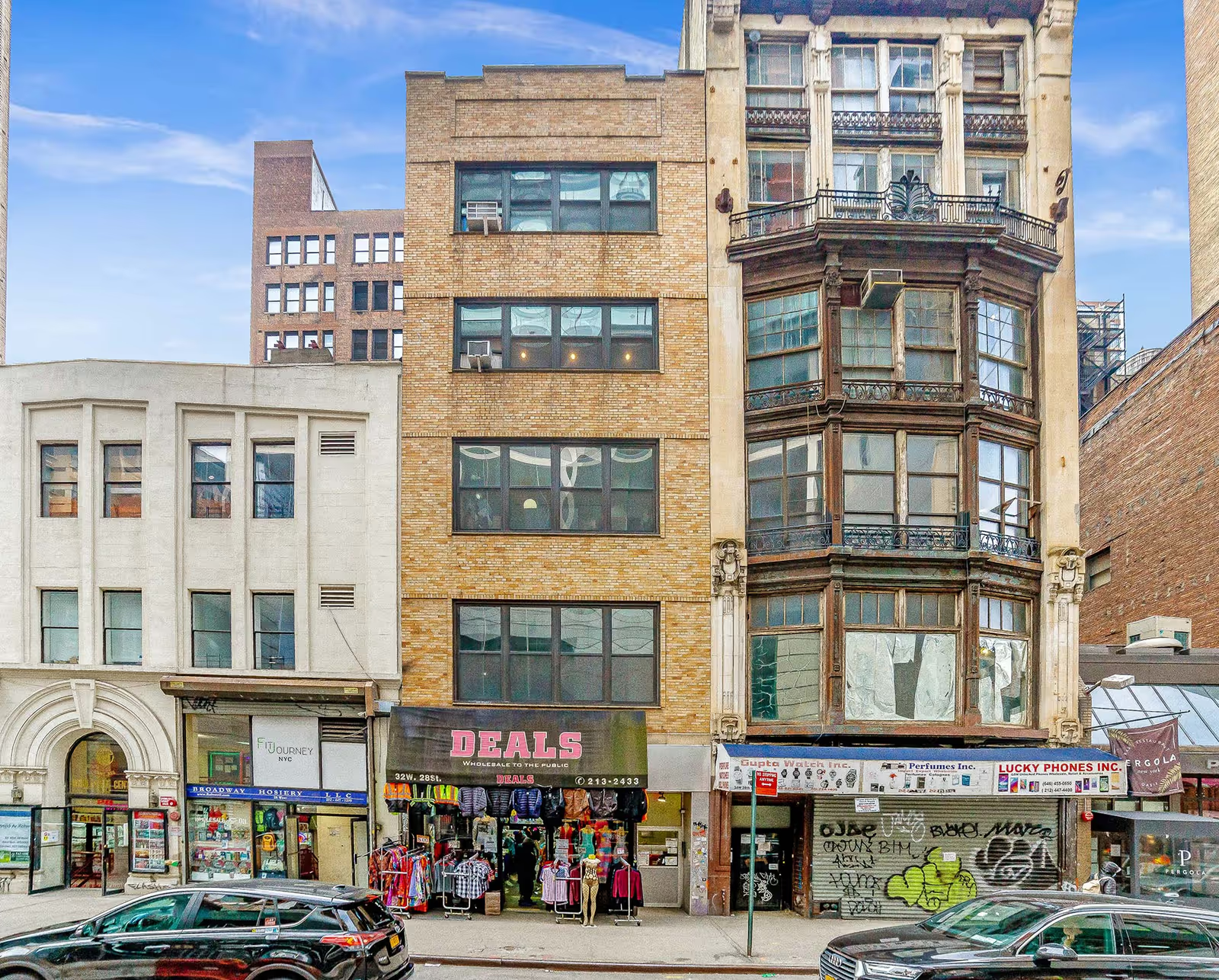
The classic graduation decision. Flatiron's full floors top out where Midtown's begin. Stay south for identity, light and single-tenant floors; go north when you need one large efficient plate, building security and boardroom polish.
The fifty-three dollars between them
Seven dollars a square foot separates these two submarkets on our book, $72 in Flatiron against $79 in Midtown, about 9 percent. On a 10,000 square foot floor that is $70,000 a year, and across a seven year term with escalations on top it clears half a million dollars. Worth a decision, but smaller than most tenants assume.
Set that $7 against the spread inside each neighborhood and it shrinks. Flatiron's floors ask $43 to $115, a range of $72 a foot and wider than the distance between the two medians, while Midtown's run $79 to $130. Against the $75 citywide median across everything we represent, Flatiron sits about 4 percent under it and Midtown about 5 percent above. The submarket you choose is a weak predictor of what you will pay. The floor you choose is a strong one.
The gap that does exist tracks what each stock was built to do: Midtown's supply is large efficient plates in towers, with security and round-the-clock HVAC riding in the rent, while Flatiron's is prewar loft floors where one company holds the whole plate. Ask for usable square feet alongside rentable, since loss factor differs between a tower plate and a loft plate, and treat every ask as an opening: free rent and improvement allowance on a floor that has been sitting shift the effective cost by several dollars.
What we hold in each, and who fits
Six floors in Flatiron, four in Midtown, and the inventory settles more searches than the rent does.
- Flatiron: 6 floors, 2,940 to 10,562 square feet, roughly 17 to 60 desks, asking $43 to $115.
- Midtown: 4 floors, 7,092 to 19,097 square feet, roughly 41 to 109 desks, asking $79 to $130.
- Real overlap: 7,100 to 10,600 square feet, or 41 to 60 desks. Outside that band there is no comparison to make.
A team of 25 has nothing to see in Midtown today. The smallest floor there is 7,092 square feet at 520 Madison Avenue, 41 desks and about $73,875 a month, so a 25 person company pays $125 a foot for sixteen empty seats. Eighty people hit the opposite wall: the largest Flatiron floor, the entire 9th and 10th at 30 West 21st Street, stops near 60.
Within Flatiron the arithmetic deserves an example. 54 West 21st Street, 3,960 feet at $72, runs about $23,760 a month; 276 Fifth Avenue, 5,500 feet at $52, runs about $23,833. The same check, nine more desks. And 277 Park Avenue, the largest floor across the two submarkets at 19,097 feet, asks $130, the top of the Midtown range.
Getting there, and getting people to come
Flatiron reads N/Q/R/W, 4/5/6, F/M, L at 14th and 23rd. Midtown reads nearly every line, with Grand Central and Penn within reach. Both are strong, for different populations.
That density of lines is why Flatiron's hiring radius covers all five boroughs and New Jersey, which settles it for a company whose people already live in the city. Midtown answers for the population Flatiron reaches less easily: a senior hire from outside the city arrives at one of the two terminals and walks to the desk, and every transfer you add to a morning is a quiet argument for the competing offer. Junior hires in the boroughs cost you nothing in Flatiron; directors with houses in the suburbs make Midtown a recruiting tool that should be priced as one.
Our recommendation, by tenant type
Under about 40 desks, take Flatiron, and it is not close: nothing we hold in Midtown is small enough, and renting tower space you will not sit in burns the $7 gap several times over.
Over about 60 desks, take Midtown with as little debate, since Flatiron does not build floors that size and splitting one company across two plates costs more in friction than the rent saving returns.
Between 40 and 60 desks the two genuinely compete, and our default is Flatiron: the whole plate, your name on the elevator lobby, and roughly $70,000 a year back on a floor that size. Three things override it. Clients who come to you make the address part of the pitch, a senior bench commuting from outside the city makes hiring outweigh rent, and a company expecting to double inside the term wants large plates to expand into rather than another move.
Paying more for Midtown is often the right call. Paying more because the address sounds serious in a board meeting is not, and the Flatiron discount is not automatic: the penthouse at 30 West 21st Street asks $115, about $50,312 a month for 5,250 feet.
Tour both in one afternoon
These submarkets sit minutes apart and belong in the same afternoon, because a floor walked in March measured against one walked in May is a comparison of memories. We hold floors in both, so it is one route and one broker.
Two in Flatiron and two in Midtown makes a comfortable day. Bring the headcount you have and the one you expect, plan at 175 square feet per person, and ask on each floor for the usable measurement, the concessions behind the ask, and the security requirement.
Is Flatiron more expensive than Midtown?
No, Flatiron is about 42% cheaper, $72 against $125 per square foot per year. Both figures are medians of Nomad's current availability.
Which suits a growing team better?
Flatiron: The heart of Midtown South and the centre of NYC’s venture-backed tech cluster. Midtown: Manhattan’s corporate core, with the deepest supply of full-floor space. The deciding factor is usually commute and the rent difference on the floor size you actually need.
How do they compare on transit?
Flatiron, N/Q/R/W, 4/5/6, F/M, L at 14th and 23rd. Midtown, Nearly every line; Grand Central and Penn within reach.
Which should you choose?
The classic graduation decision. Flatiron's full floors top out where Midtown's begin. Stay south for identity, light and single-tenant floors; go north when you need one large efficient plate, building security and boardroom polish.
Can we tour both submarkets in one day?
Yes. These submarkets sit minutes apart; a well-planned tour covers four to six floors across both in an afternoon, which is the fastest way to make this comparison real.
How firm are the boundaries between these neighborhoods?
Soft. Brokers and landlords shade labels a block or two in whichever direction sounds better. Judge the block and the building, not the name on the map.
Matching space available now
-
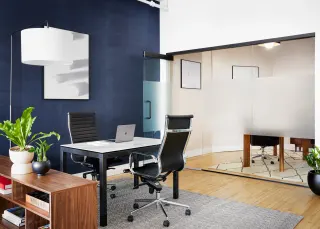 900 Broadway [Partial 9th Floor] 2,940 sq ft $92/sq ft Flatiron
 -
 54 West 21st Street [Partial 4th Floor] 3,960 sq ft $72/sq ft Flatiron
 -
 30 West 21st Street [Penthouse floor] 5,250 sq ft $115/sq ft Flatiron
 -
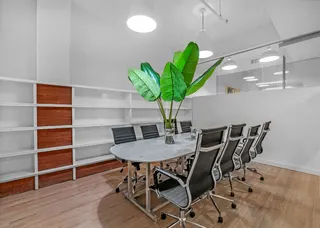 276 Fifth Avenue [9th Floor] 5,500 sq ft $52/sq ft Flatiron
 -
 137 East 25th Street [6th Floor] 8,308 sq ft $43/sq ft Flatiron
 -
 30 West 21st Street [Entire 9th & 10th Floors] 10,562 sq ft Flatiron
The team
The people you'll actually deal with
Tenant-side brokers, builders and operators, 300+ New York offices delivered between them.
Meet the whole team → William Janetschek
 Matthew DeRose
 Megan Gallagher
 Nicholas Hein
 Adam Justin
 David Greene
Talk to a broker
Availability moves daily, get today's version
The spaces above are current as of this week. Tell us team size and timing and a broker sends today's live list for this exact search, with all-in monthly costs, and anything new that has not been published yet.
- Same daya broker replies personally, no automated triage
- Tenant-onlyNomad never represents the landlord
- Open pricingrent and size published before you talk to anyone
- 300+ officesdelivered across 2M+ sq ft in New York
Or call 646-688-3158