Union Square vs Grand Central: Office Space Compared
Union Square office space runs a median of $88 per square foot per year against $81 in Grand Central, Union Square is about 9% more expensive. Nomad currently has 3 spaces in Union Square and 2 in Grand Central.
Updated 2026-10-01 · $88 vs $81 per sq ft · Nomad Group

Two transit kings serving different maps. Union Square owns the subway map and the downtown talent pool; Grand Central owns the suburban rail map and the institutional cluster. Plot where the team actually lives and the page answers itself.
The rent gap is $7 a foot, and most of it is mix
Union Square's median asking rent is $88 per square foot per year against $81 in Grand Central, a difference of $7 a foot or roughly 9%. Both stand above the $75 citywide median across our book, Union Square by about 17% and Grand Central by about 8%.
Ranges say more here than medians do. Union Square runs $60 to $115 across three floors, a $55 spread, against $72 to $89 across two in Grand Central. That Union Square median is the midpoint of exactly two priced floors, a 2,500 footer at $60 and a 4,000 foot suite at $115. Neither number is a market index. Both describe what we can walk you through this month.
What lifts Union Square is scarcity rather than any quality the terminal blocks lack. The stock north of the park is boutique prewar with big windows and park light, and the submarket is small enough that a landlord with a good floor prices it knowing you have three choices. Asking rent is a starting position in both places, and free rent, a work letter and the treatment of electric and cleaning close part of that $7 before anyone signs.
Three floors against two, and the sizes barely overlap
We hold 3 spaces in Union Square and 2 in Grand Central. Union Square spans 2,500 to 13,754 square feet, about 14 to 79 desks at the 175 square feet per person we plan around. Grand Central spans 5,230 to 5,772 square feet, about 30 to 33 desks. Two floors, one size.
- Under 30 people: Union Square by default. The only space below 5,000 square feet in either submarket is the 2,500 foot partial seventh at 29 West 17th Street, $60 a foot, about $12,500 a month.
- Thirty to 33 people: the one band where both genuinely compete. It is 60 East 42nd Street, 5,772 square feet at $72, against 825 Third Avenue, 5,230 at $89, where the cheaper floor is also the larger.
- Thirty-five people and up: Union Square, and a single floor. The entire second at 836 Broadway is the only space across both submarkets that holds a team into the fifties.
One pairing settles most of these conversations. Suite 202 at 900 Broadway is 4,000 square feet at $115, roughly $38,333 a month for about 23 desks. The partial 29th at 825 Third Avenue runs $38,789 for about 30. Nearly the same check, seven more people.
Same subway line, different commuter maps
Union Square gives you 4/5/6, N/Q/R/W, L all at 14th Street. Grand Central gives you 4/5/6, 7, S, Metro-North. They share the 4/5/6, which is why the two land on the same shortlist so often.
Each hub adds lines the other does not, and hiring lives in that difference. The L puts Brooklyn one stop away and the N/Q/R/W widen the catchment enough to put every borough inside a forty minute door to door, while Metro-North does the same work in the other direction, pulling Westchester and Connecticut inside forty minutes. Commute geography is the one lease term you renegotiate every morning with every employee, so map where your people sleep before you map where they sit.
Our recommendation, by tenant type
Headcount and the train your people board decide this, and it is rarely close.
- Early stage, under 30 people: Union Square. Not for the neighborhood, but because Grand Central has nothing you can fill without carrying empty desks.
- Professional services and finance whose partners and clients arrive by rail: Grand Central, and pay the $72 to $89 without apologizing. A client who steps off a train into your lobby is worth more than the difference.
- A team of exactly 30 to 33: take 60 East 42nd Street at $72 unless the tour changes your mind. It is the larger Grand Central floor and close to $50,000 a year cheaper.
The tenant who should pay $115 at 900 Broadway is the one whose recruiting depends on being in Union Square, on a small, light floor with the door to itself, in a submarket where floors open rarely. That premium runs about $35,000 a year on 5,000 square feet, modest against payroll, and a company that loses one senior hire a year to a commute has already spent it twice.
What to do next
Both submarkets can be seen in a single afternoon and we hold floors in each, so there is no reason to settle this on paper. A sensible loop is the 2,500 foot floor and the 4,000 foot suite in Union Square, then the 4/5/6 up to 42nd Street for both Grand Central floors.
Bring the same questions to every floor. Ask what the rentable number is against the usable number, because loss factor moves your real cost per foot further than a $7 median gap will, and ask what the rent covers, since electric, cleaning and the base year for escalations are where two identical looking quotes stop being identical. Get a test fit before you sign, because a floor that plans to 30 desks on paper sometimes plans to 26 in the room. We represent tenants only, so nothing here carries a landlord's preference.
Is Union Square more expensive than Grand Central?
Yes, Union Square runs about 9% higher, $88 against $81 per square foot per year. Both figures are medians of Nomad's current availability.
Which suits a growing team better?
Union Square: The best-connected transit hub below 42nd Street, minutes from NYU and Flatiron. Grand Central: East Midtown around the terminal, unmatched for Westchester and Connecticut commuters. The deciding factor is usually commute and the rent difference on the floor size you actually need.
How do they compare on transit?
Union Square, 4/5/6, N/Q/R/W, L at 14th Street. Grand Central, 4/5/6, 7, S, Metro-North.
Which should you choose?
Two transit kings serving different maps. Union Square owns the subway map and the downtown talent pool; Grand Central owns the suburban rail map and the institutional cluster. Plot where the team actually lives and the page answers itself.
Can we tour both submarkets in one day?
Yes. These submarkets sit minutes apart; a well-planned tour covers four to six floors across both in an afternoon, which is the fastest way to make this comparison real.
How firm are the boundaries between these neighborhoods?
Soft. Brokers and landlords shade labels a block or two in whichever direction sounds better. Judge the block and the building, not the name on the map.
Matching space available now
-
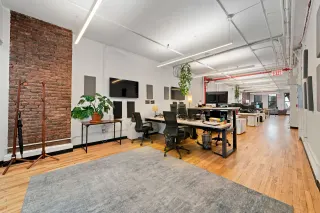 29 West 17th Street [Partial 7th Floor] 2,500 sq ft $60/sq ft Union Square
 -
 900 Broadway [Suite 202] 4,000 sq ft $115/sq ft Union Square
 -
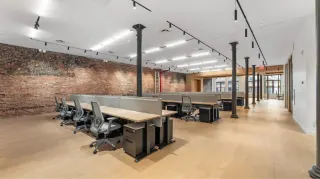 836 Broadway [Entire 2nd Floor] 13,754 sq ft Union Square
 -
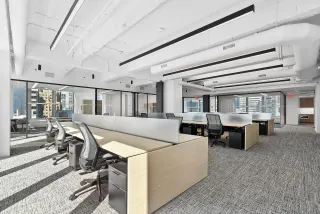 825 Third Avenue [Partial 29th Floor] 5,230 sq ft $89/sq ft Grand Central
 -
 60 East 42nd Street [Partial 13th Floor] 5,772 sq ft $72/sq ft Grand Central
The team
The people you'll actually deal with
Tenant-side brokers, builders and operators, 300+ New York offices delivered between them.
Meet the whole team → William Janetschek
 Matthew DeRose
 Megan Gallagher
 Nicholas Hein
 Adam Justin
 David Greene
Talk to a broker
Availability moves daily, get today's version
The spaces above are current as of this week. Tell us team size and timing and a broker sends today's live list for this exact search, with all-in monthly costs, and anything new that has not been published yet.
- Same daya broker replies personally, no automated triage
- Tenant-onlyNomad never represents the landlord
- Open pricingrent and size published before you talk to anyone
- 300+ officesdelivered across 2M+ sq ft in New York
Or call 646-688-3158