SoHo vs Union Square: Office Space Compared
SoHo office space runs a median of $98 per square foot per year against $88 in Union Square, SoHo is about 12% more expensive. Nomad currently has 9 spaces in SoHo and 3 in Union Square.
Updated 2026-10-01 · $98 vs $88 per sq ft · Nomad Group

Both premium, differently. SoHo sells identity: cast iron, retail energy, downtown founders. Union Square sells reach: every trunk line plus the L at the door. Brand companies go SoHo; hiring-radius companies go Union Square.
The ten dollars between them, and what sets the price
The medians land at $98 in SoHo and $88 in Union Square, ten dollars a foot and a little over 11%, which on a 5,000 square foot floor is $50,000 a year and about what one round of real negotiation moves. The Union Square figure is the midpoint of two priced floors, $60 and $115, so it shifts the day a fourth one lists.
Inside each submarket the spread is where the money sits. SoHo availability runs $68 to $125 a foot and Union Square $60 to $115, ranges that still dwarf the ten dollars between the medians. In our SoHo book the one genuinely large floor, 27,344 square feet at One Soho Square, carries the lowest rent at $68, while the small floors ask $120 and $125.
What the premium buys differs: landmarked cast-iron lofts on Greene, Mercer and Broadway in SoHo, boutique prewar floors with park light in Union Square. Both sit above the $75 citywide median across our book, SoHo by about 31% and Union Square by about 17%, and both are asking rents, so weigh free rent, improvement money and escalations before you weigh addresses.
What we hold in each, and who can actually fit
Today we hold 7 floors in SoHo and 3 in Union Square, and that gap decides more searches than rent does. SoHo runs 3,750 to 27,344 square feet, roughly 21 to 156 desks at the 175 square feet per person we plan against; Union Square runs 2,500 to 13,754 square feet, roughly 14 to 79 desks.
Read as a seating chart rather than a price list:
- Under about 20 people, Union Square only: our smallest SoHo floor is 3,750 square feet, while 29 West 17th Street offers 2,500 at $60 a foot, about $12,500 a month.
- Between roughly 21 and 79 desks, both compete, and that band holds most of our conversations.
- Above 80 people, SoHo only, since Union Square stops at 13,754 square feet against 27,344 at One Soho Square.
A three floor market behaves like one, so tour a Union Square floor the week it lists. The largest of the three, the entire second at 836 Broadway, is not publicly priced, so ask us where it stands.
Getting there, and getting your next twenty hires there
The lines, as we publish them. SoHo: N/Q/R/W, 6, A/C/E, B/D/F/M. Union Square: 4/5/6, N/Q/R/W, L all at 14th Street. They share the N/Q/R/W and the 6.
Union Square concentrates everything into one interchange at 14th Street, the widest catchment below 42nd Street, which puts Brooklyn's engineering talent one stop away and keeps most of the region inside a forty-minute door-to-door. SoHo spreads six subway lines across a five minute walk instead.
Make that a hiring question rather than a map question: pull the home stations of the staff you have and the neighborhoods you keep recruiting from, then run both addresses door-to-door against those origins. If your last three engineering hires came from Brooklyn, Union Square's reach shows up in your offer acceptance rate rather than your rent line, and NYU keeps a junior pipeline within walking distance of it too. You are signing a commute for the length of the term.
Our recommendation, by tenant type
We take positions on this, and one of them says pay more.
- Consumer, fashion and other brand-led companies: SoHo, and pay for the loft. When clients and candidates walk through your door, the room does work no rent comparison captures.
- Engineering-heavy teams with staff across Brooklyn and the outer boroughs: Union Square, which now reads ten dollars under SoHo at the median. One senior engineer who declines over the commute costs more in the first month than the rent difference costs in the first year.
- Teams of 14 to 20 people: Union Square, the only one of the two holding a floor that size today. Teams of 80 and up: SoHo, for the same reason in reverse.
SoHo's landmarked buildings limit a buildout, and which features can move is a question to settle before the letter of intent. Union Square is thin and expensive at the median, and its 79 desk ceiling means a fast-growing company will be back in the market sooner than it planned.
Settle it in one afternoon
These two sit minutes apart and we hold floors in both, so a planned route covers four to six floors across the pair in one afternoon. Standing inside a $68 SoHo floor and a $115 Union Square floor within the same two hours settles arguments a spreadsheet will not.
Bring the headcount you expect in twenty four months, at 175 square feet per person. Ask each landlord for the loss factor so you are comparing usable area rather than rentable, then for the improvement allowance and the free rent they will discuss, and run a test fit before the letter of intent, since a plan that yields eight fewer desks changes which submarket you belong in.
Then send us a headcount and a move-in date. We represent tenants only, and we will tell you which of these two you should be in.
Is SoHo more expensive than Union Square?
Yes, SoHo runs about 12% higher, $98 against $88 per square foot per year. Both figures are medians of Nomad's current availability.
Which suits a growing team better?
SoHo: Cast-iron lofts with high ceilings, the default for design-led and consumer brands. Union Square: The best-connected transit hub below 42nd Street, minutes from NYU and Flatiron. The deciding factor is usually commute and the rent difference on the floor size you actually need.
How do they compare on transit?
SoHo, N/Q/R/W, 6, A/C/E, B/D/F/M. Union Square, 4/5/6, N/Q/R/W, L at 14th Street.
Which should you choose?
Both premium, differently. SoHo sells identity: cast iron, retail energy, downtown founders. Union Square sells reach: every trunk line plus the L at the door. Brand companies go SoHo; hiring-radius companies go Union Square.
Can we tour both submarkets in one day?
Yes. These submarkets sit minutes apart; a well-planned tour covers four to six floors across both in an afternoon, which is the fastest way to make this comparison real.
How firm are the boundaries between these neighborhoods?
Soft. Brokers and landlords shade labels a block or two in whichever direction sounds better. Judge the block and the building, not the name on the map.
Matching space available now
-
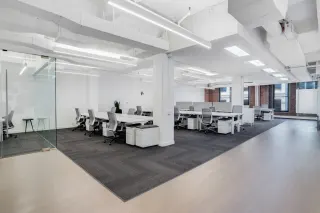 110 Greene Street [Partial 5th Floor] 3,750 sq ft $95/sq ft SoHo
 -
 6 Greene Street [Entire 2nd Floor] 4,900 sq ft $78/sq ft SoHo
 -
 60 Charlton Street [Partial 8th Floor] 5,003 sq ft $120/sq ft SoHo
 -
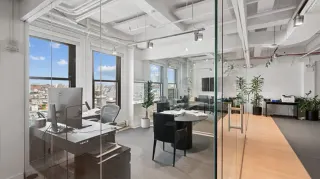 104-110 Greene Street [Partial 11th Floor] 5,375 sq ft $110/sq ft SoHo
 -
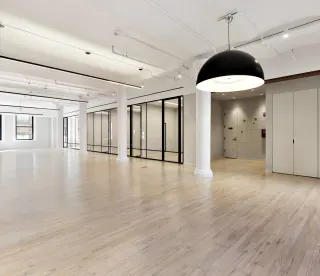 520 Broadway [Entire 10th Floor] 5,539 sq ft $125/sq ft SoHo
 -
 503-511 Broadway [Penthouse] 5,552 sq ft $125/sq ft SoHo
The team
The people you'll actually deal with
Tenant-side brokers, builders and operators, 300+ New York offices delivered between them.
Meet the whole team → William Janetschek
 Matthew DeRose
 Megan Gallagher
 Nicholas Hein
 Adam Justin
 David Greene
Talk to a broker
Availability moves daily, get today's version
The spaces above are current as of this week. Tell us team size and timing and a broker sends today's live list for this exact search, with all-in monthly costs, and anything new that has not been published yet.
- Same daya broker replies personally, no automated triage
- Tenant-onlyNomad never represents the landlord
- Open pricingrent and size published before you talk to anyone
- 300+ officesdelivered across 2M+ sq ft in New York
Or call 646-688-3158