SoHo vs Bryant Park: Office Space Compared
SoHo and Bryant Park price almost identically, a median of $98 against $96 per square foot per year, inside the margin you would negotiate away. The choice comes down to what is actually available: 9 spaces in SoHo at 3,750–27,344 sq ft, against 4 in Bryant Park at 4,109–17,296 sq ft. SoHo runs N/Q/R/W, 6, A/C/E, B/D/F/M; Bryant Park runs B/D/F/M, 7, N/Q/R/W at 42nd.
Updated 2026-10-01 · $98 vs $96 per sq ft · Nomad Group
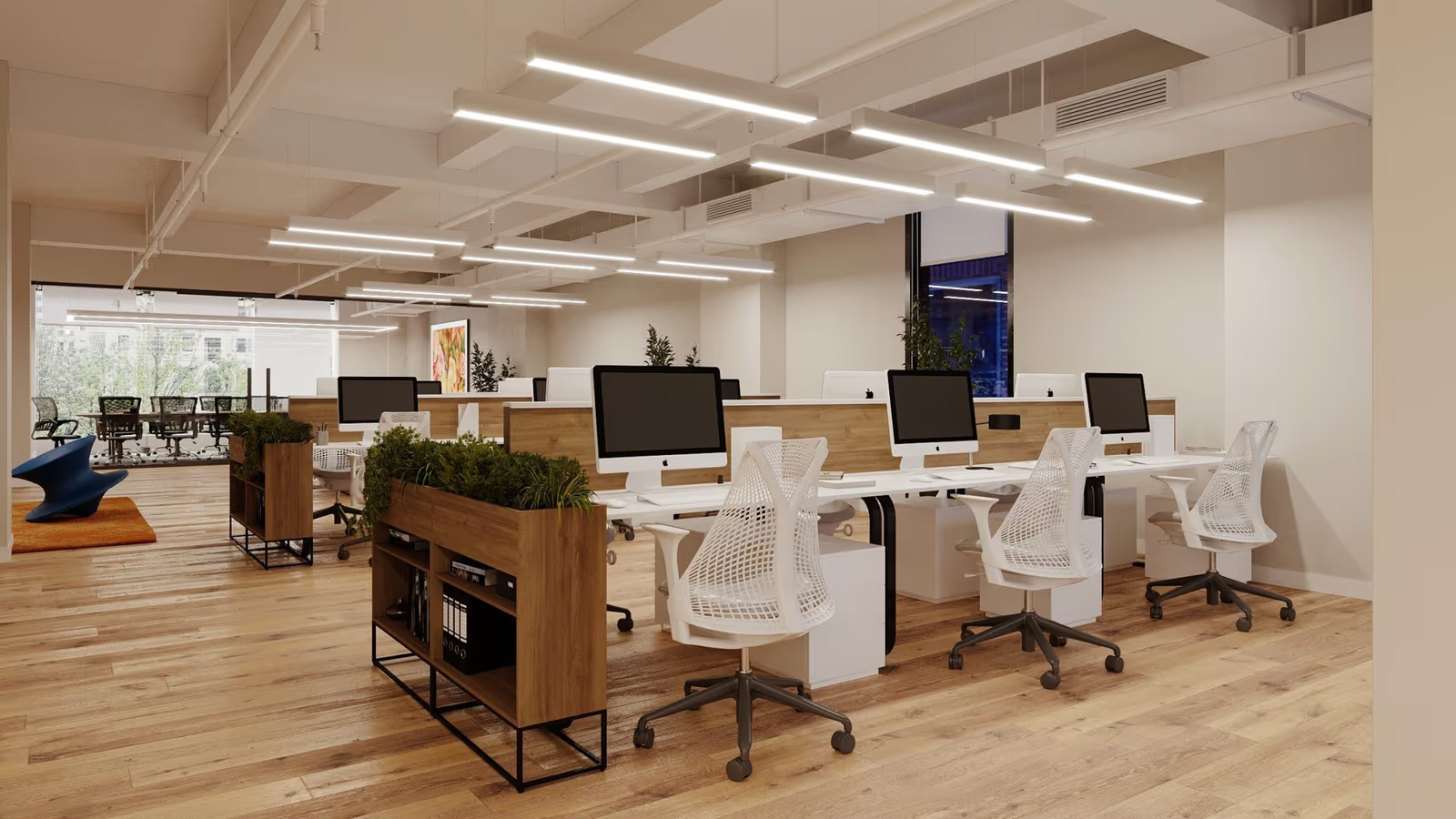
Two flavors of premium: downtown cast-iron cool against Midtown trophy polish. Consumer and creative brands read better in SoHo; funds, law and media read better over the park. Choose the room your clients expect to walk into.
The gap is $2 a foot, and the median hides most of the story
Median asking rent in SoHo is $98 per square foot per year against $96 in Bryant Park, a gap of $2 a foot, about 2% on top of the Bryant Park number and inside what one round of negotiation moves. On a 7,500 square foot floor that is about $15,000 a year, noticeable and nowhere near what decides a decade.
The median is doing a great deal of work there. Our nine SoHo floors span $68 to $125, a $57 spread inside one submarket, while the four Bryant Park floors we hold span $65 to $125 around a $95.50 middle. Seven SoHo floors ask $85 or more and five ask more per foot than Bryant Park, and only One Soho Square, much the largest floor we hold there, sits low enough to pull the median down.
Both sit well above the $75 citywide median across our book, $23 above it downtown and about $21 above it at the park, so neither is a value play. SoHo prices the loft, the light and the address; Bryant Park prices the tower and the park in front of it. Asking rent only opens the conversation: taking rent lands lower once free rent, the improvement allowance and escalations fold into one effective number.
What we hold in each, and who actually fits
Our SoHo book is seven floors running 3,750 to 27,344 square feet, roughly 21 to 156 desks at the 175 square feet per person we plan against. Bryant Park is one floor, 7,500 square feet, about 43 desks, the entire 33rd. A company of 12 cannot be housed at the park today, and neither can a company of 100.
Run the arithmetic on floors rather than medians and the verdict flips twice. The Bryant Park floor at $96 is $60,000 a month. Our closest SoHo floor by size, the 7,300 square feet at 50 Greene Street asking $98, is about $59,617, so Midtown costs barely $380 more a month for 200 more square feet. Against our 5,003 square foot SoHo space at $120, about $50,030 a month, Bryant Park gives 50% more room for 20% more rent.
Availability count moves leverage as well: seven competing floors tell a landlord you can walk two blocks and sign elsewhere, which one floor never does.
Getting there, and getting people to come in
SoHo's transit is N/Q/R/W, 6, A/C/E, B/D/F/M. Bryant Park's is B/D/F/M, 7, N/Q/R/W at 42nd, with Grand Central a five-minute walk. Notice the overlap first: both sit on the B/D/F/M, so anyone already commuting on that line reaches either office unchanged.
Everyone else feels the geography twice a day. Bryant Park puts you at 42nd Street, a short walk from Grand Central, which counts when much of your staff comes in from the northern suburbs on a timetable. SoHo is easiest for people living downtown or across the river, hardest for a team that has drifted north over ten years of hiring. Map where your people actually live before touring either, because a lease runs five to ten years and a commute that adds twenty minutes each way is a retention cost.
The recommendation, without the hedging
Most tenants who reach this page should take SoHo, and price is the weakest reason why. Seven floors give a real choice of size, layout and price inside one neighborhood, so you can run a process and walk away from a landlord without leaving the submarket.
- Consumer, fashion, design, media and the downtown startup world: SoHo. Your clients and candidates expect the loft, and a trophy floor tells them you spend money on the wrong things.
- Any team landing near 43 desks: both work now, since 50 Greene Street holds 7,300 square feet in SoHo against the 7,500 at the park, and below about 21 people neither has a floor for you.
Take Bryant Park when the room is part of what you sell. Funds, law firms and anyone whose revenue arrives through meetings with people who flew in should take the park floor and stop agonizing, since it now asks about $2 a foot under the SoHo median. If partners bring clients through the office, if you hire senior people who would read a loft as a step backward, or if much of your staff commutes from the north, that floor earns its premium in year one.
What we argue against is splitting the difference. Tenants who cannot choose land on a compromise floor in a third submarket nobody is excited about.
See them both in one afternoon
These two sit a single subway ride apart, and we can put four to six floors across both in front of you in one afternoon. Bring whoever will sit in the room; their reaction in the first thirty seconds is usually the right answer. We represent tenants only and hold floors in each, so tell us your headcount and your ceiling in three years and we will model both floors across the full term rather than per foot.
Is SoHo more expensive than Bryant Park?
Yes, SoHo runs about 3% higher, $98 against $96 per square foot per year. Both figures are medians of Nomad's current availability.
Which suits a growing team better?
SoHo: Cast-iron lofts with high ceilings, the default for design-led and consumer brands. Bryant Park: Trophy towers around the park, steps from Grand Central and Times Square. The deciding factor is usually commute and the rent difference on the floor size you actually need.
How do they compare on transit?
SoHo, N/Q/R/W, 6, A/C/E, B/D/F/M. Bryant Park, B/D/F/M, 7, N/Q/R/W at 42nd.
Which should you choose?
Two flavors of premium: downtown cast-iron cool against Midtown trophy polish. Consumer and creative brands read better in SoHo; funds, law and media read better over the park. Choose the room your clients expect to walk into.
Can we tour both submarkets in one day?
Yes. These submarkets sit minutes apart; a well-planned tour covers four to six floors across both in an afternoon, which is the fastest way to make this comparison real.
How firm are the boundaries between these neighborhoods?
Soft. Brokers and landlords shade labels a block or two in whichever direction sounds better. Judge the block and the building, not the name on the map.
Matching space available now
-
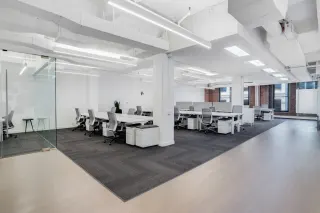 110 Greene Street [Partial 5th Floor] 3,750 sq ft $95/sq ft SoHo
 -
 6 Greene Street [Entire 2nd Floor] 4,900 sq ft $78/sq ft SoHo
 -
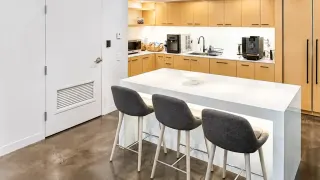 60 Charlton Street [Partial 8th Floor] 5,003 sq ft $120/sq ft SoHo
 -
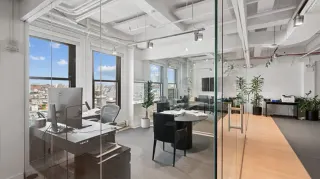 104-110 Greene Street [Partial 11th Floor] 5,375 sq ft $110/sq ft SoHo
 -
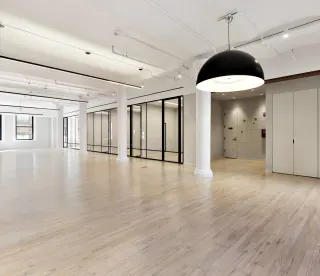 520 Broadway [Entire 10th Floor] 5,539 sq ft $125/sq ft SoHo
 -
 503-511 Broadway [Penthouse] 5,552 sq ft $125/sq ft SoHo
The team
The people you'll actually deal with
Tenant-side brokers, builders and operators, 300+ New York offices delivered between them.
Meet the whole team → William Janetschek
 Matthew DeRose
 Megan Gallagher
 Nicholas Hein
 Adam Justin
 David Greene
Talk to a broker
Availability moves daily, get today's version
The spaces above are current as of this week. Tell us team size and timing and a broker sends today's live list for this exact search, with all-in monthly costs, and anything new that has not been published yet.
- Same daya broker replies personally, no automated triage
- Tenant-onlyNomad never represents the landlord
- Open pricingrent and size published before you talk to anyone
- 300+ officesdelivered across 2M+ sq ft in New York
Or call 646-688-3158