Chelsea, NYC: The Neighborhood, From an Office Tenant's Side
Chelsea is where New York’s tech and creative economy actually sits. The neighborhood runs from the Meatpacking border at 14th Street up to 30th, west of Sixth Avenue, and its working core for office tenants is the loft rows of the mid-20s: garment-era buildings with 11-to-13-foot ceilings, oversized windows and full floors that one company can hold alone. Google anchors the west side, the gallery district keeps street level interesting, and the High Line and Chelsea Market give visiting candidates something to remember. For a growing company, Chelsea’s pitch is simple: more building choice than any comparable submarket, on blocks people genuinely want to commute to.
Updated 2026-09-30 · The default neighborhood for New York tech and design teams that want a floor of their own · Nomad Group
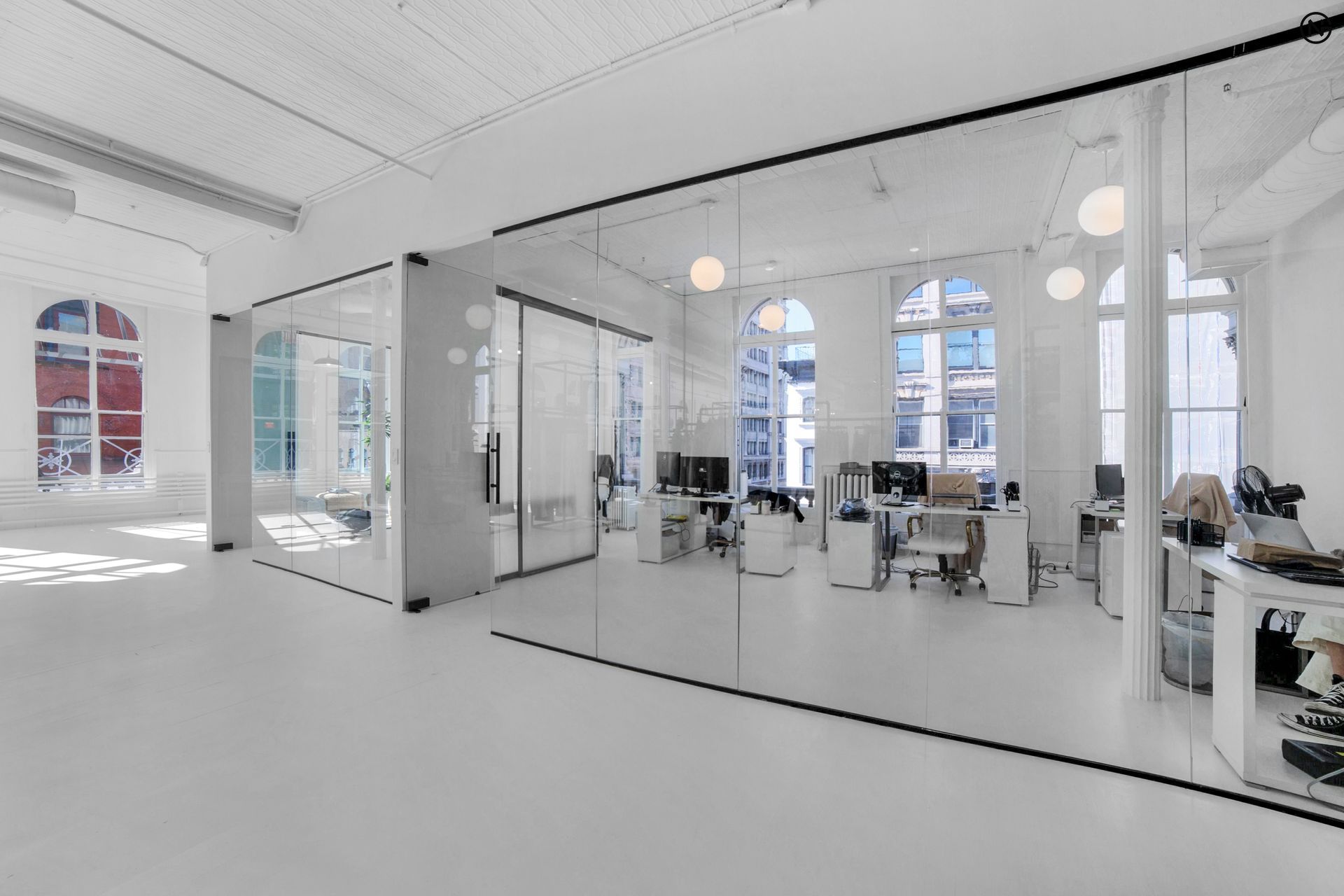
The building stock, and why it suits offices
Chelsea's office fabric is the mid-20s side-street loft: six to twelve storeys, poured around 1910 for the garment trade, with the deep floor plates and high ceilings that trade needed. A century later those same bones are exactly what a technology or creative team wants. Columns are sparse, windows are oversized on two exposures, and floors run 8,000 to 19,000 square feet, big enough that one company can hold a whole plate and brand the elevator lobby.
That single-tenant-per-floor pattern matters more than it sounds. A keyed elevator that opens into your own reception changes how an office feels to staff and to visitors, and it removes the shared-corridor compromises of a multi-tenant floor: no negotiating over conference-room noise, no branding conflicts, no strangers at the pantry.
The trade-off is that prewar stock varies building by building. Two lofts on the same block can differ completely in elevator speed, electrical capacity and window condition. That is why walking floors matters more in Chelsea than in a glass tower market, and why the spread inside the neighborhood is wide: our current floors here ask $44 to $64 per square foot, and the gap between those numbers is mostly building quality, not location.
Who is actually here
Google anchors the west side of the neighborhood with its Eighth Avenue campus and the St. John's Terminal building further south, and that gravity has pulled a decade of technology tenants into the surrounding blocks. The galleries that made West Chelsea famous share the streets with agencies, studios, and the engineering offices of companies that started in coworking and graduated to their own floors.
For hiring, that mix does two things. It normalises the neighborhood for candidates, an address on West 26th needs no explanation in a job listing, and it keeps the lunch, coffee and after-work fabric dense enough that staff treat the office as somewhere worth commuting to. The High Line and the Hudson River park system add the kind of outdoor space no landlord can build you.
What it costs against the rest of the corridor
Chelsea is currently the value play of Midtown South. The median across our seven floors here is $59 per square foot per year, against $75 for the book as a whole, $98 in SoHo and over $100 at the Union Square premium buildings. For a team of forty at 175 square feet a person, the gap between Chelsea and SoHo is roughly $294,000 a year, real money that most teams would rather put into hiring.
- Asking range on our current Chelsea floors: $44 to $64 per square foot
- Median: $56, about 25% below the $75 book median
- Floor sizes available now: 2,937 to 18,668 square feet
- Typical fit: teams of 17 to 107 at standard density
The reason it prices below Flatiron and Union Square is transit reach, not quality. If your team clusters west of Seventh Avenue, or rides the A/C/E and 1, that discount is close to free. If your hiring pool leans Brooklyn and Queens, weigh the commute section below honestly.
The commute test
Chelsea runs on the west-side lines: the A/C/E and L at Eighth Avenue, the 1 at Seventh, the F/M at Sixth, with stops at 14th and 23rd. Penn Station is a ten-minute walk from the mid-20s blocks, which puts New Jersey and Long Island commuters closer than any downtown neighborhood can.
What Chelsea lacks is the east-side trunk: no 4/5/6, no N/Q/R/W inside the neighborhood. A team drawing heavily from the Upper East Side, or from the parts of Brooklyn served by the express lines through Union Square, will feel that as one extra transfer each way. The honest way to run this decision is to collect the home stations of the people you already employ and count transfers, not minutes on a map.
Running a Chelsea search well
Start from floor plates, not addresses. Decide whether you want a full floor with the keyed elevator, most teams do once they see one, then filter to buildings whose plates match your headcount at 150 to 200 square feet a person. Walk at least three so the differences in light and lobby condition are obvious, and ask every building about electrical capacity early if you run heavier-than-laptop hardware.
Asking rents here are the start of a negotiation, not the end. On prewar floors the landlord's flexibility usually shows up as free months and buildout contribution rather than a lower face rent, and the difference between a well-negotiated and signed-as-asked Chelsea lease is routinely 10% of total cost. Every rent we publish on this site is the real asking figure, so you can walk in knowing exactly where the conversation starts.
The floors on the book right now
Chelsea is currently our deepest submarket alongside SoHo: seven floors from 2,937 to 18,668 square feet. At the small end, 153 West 27th Street's partial floors suit a first office at value pricing, and its newly listed 11th floor arrives furnished, wired and sound-mitigated. The middle of the book runs through the West 26th and 27th Street lofts: 104 West 27th's entire ninth floor with natural light on four sides and an ownership open to building the space to suit, and 151 West 26th's partial tenth with unobstructed western views and exposed brick. At the top, 275 Seventh Avenue's entire 24th floor puts 18,668 square feet and hundred-person capacity behind a single keyed elevator, with the kind of avenue views the side streets cannot offer.
Two of the seven carry full 3D walkthroughs, 153 West 27th's 11th floor among them, so a Chelsea shortlist can be part-walked from a laptop before anyone books a tour. Every floor's asking rent is published on its page, $44 to $64 across the set.
How deals here tend to trade
Chelsea landlords skew private and prewar: family holdings, boutique managers, decision-makers you can actually reach. That shapes the negotiation, less committee, more conversation, and concessions tend to arrive as free months and buildout contribution rather than face-rent cuts that would reprice the building.
Terms run friendlier to mid-size tenants than the tower districts: five-year asks are normal, three-year deals gettable on the smaller floors, and the Good Guy Guarantee is the standard personal backstop. A tenant arriving with a priced buildout and a real alternative floor, the posture we set up as default, routinely improves the opening economics by ten percent or better across the package.
What is Chelsea known for?
Art and technology sharing the same blocks: the largest gallery cluster in the city, the High Line, Chelsea Market, and the Manhattan end of Google’s New York campus. For office tenants that mix translates into a neighborhood that reads creative without trying.
Is Chelsea a good place for an office?
For teams recruiting against other startups, it is the safest answer in Manhattan. Deep loft inventory, strong subway coverage on three trunk corridors, and a street life that makes the office an argument for coming in. The trade against Flatiron is a few blocks of address prestige for meaningfully more building choice.
How do people get to Chelsea?
The A/C/E and L meet at Eighth Avenue and 14th, the 1 runs up Seventh, the F/M up Sixth, and PATH brings New Jersey in at 14th and 23rd. Brooklyn commutes ride the L; the West Side line covers Penn Station connections at 28th.
Who offices in Chelsea?
Google most famously, plus the long tail it anchors: engineering teams, design studios, media and gallery-adjacent businesses in the 26th–27th Street loft rows. The typical Chelsea office tenant is a company of 15–100 that wants its own floor rather than a tower suite.
What does office space cost in Chelsea?
Across Nomad's current Chelsea availability, asking rents run $44–$64 per square foot per year, median $56, every listing publishes its rent, size and address. The live availability sits on the Chelsea submarket page.
Matching space available now
-
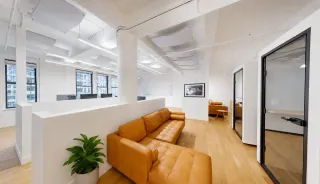 153 West 27th Street [Partial 11th Floor] 2,937 sq ft $60/sq ft Chelsea
 -
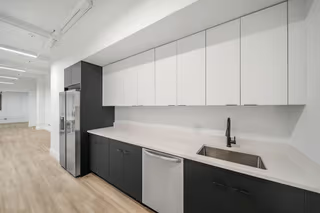 153 W 27th Street [Partial 3rd Floor] 2,978 sq ft $44/sq ft Chelsea
 -
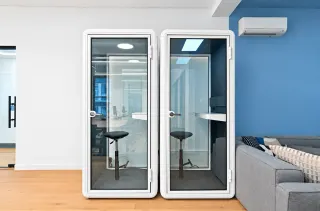 115 West 30th Street [Partial 4th Floor] 3,500 sq ft $55/sq ft Chelsea
 -
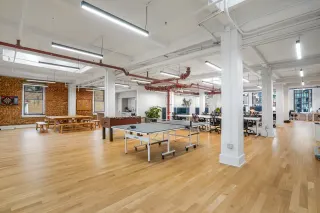 104 West 27th Street [Entire 9th Floor] 7,047 sq ft $59/sq ft Chelsea
 -
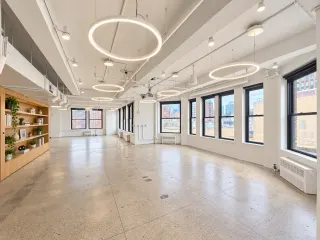 237 West 27th Street [Entire 11th Floor] 7,158 sq ft $44/sq ft Chelsea
 -
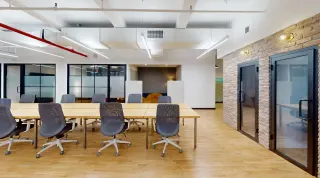 151 West 26th Street [Partial 10th Floor] 9,000 sq ft $64/sq ft Chelsea
The team
The people you'll actually deal with
Tenant-side brokers, builders and operators, 300+ New York offices delivered between them.
Meet the whole team → William Janetschek
 Matthew DeRose
 Megan Gallagher
 Nicholas Hein
 Adam Justin
 David Greene
Talk to a broker
Availability moves daily, get today's version
The spaces above are current as of this week. Tell us team size and timing and a broker sends today's live list for this exact search, with all-in monthly costs, and anything new that has not been published yet.
- Same daya broker replies personally, no automated triage
- Tenant-onlyNomad never represents the landlord
- Open pricingrent and size published before you talk to anyone
- 300+ officesdelivered across 2M+ sq ft in New York
Or call 646-688-3158